A Successful Partnership between Guangzhou Siben and Fuyao Glass

Author: Site Editor     Publish Time: 2022-08-10      Origin: Site

Inquire

In the tide of industrial development, close cooperation between enterprises often yields unexpected results. The collaboration between Guangzhou Siben Environmental Technology Co., Ltd. and Fuyao Glass is a shining example of such success.


On August 30, 2022, Siben and Fuyao Glass embarked on a remarkable journey of partnership. As a world-renowned automotive glass manufacturer, Fuyao Glass operates advanced production facilities and holds a leading position in the industry. However, to maintain a clean and tidy production environment that meets high-quality manufacturing standards, the company urgently needed efficient cleaning equipment.
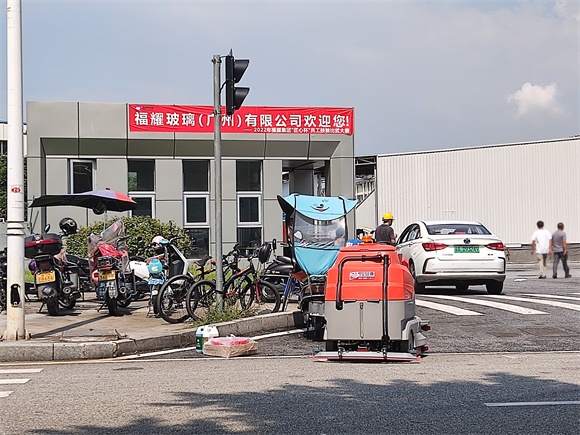

fy1


Upon learning of Fuyao Glass's needs, Siben immediately sprang into action. A professional team was dispatched to the factory for an in-depth site survey. During the visit, the team carefully studied the facility's layout, production flow, and cleaning challenges. They engaged in thorough communication with factory staff to understand their needs and expectations. By gaining comprehensive insight into the site conditions, the Siben team gathered first-hand information, laying a solid foundation for developing a tailored cleaning equipment solution.


Based on Fuyao Glass's specific requirements, Siben provided a customized cleaning equipment plan, with the X7 ride-on scrubber-dryer as the centerpiece.


This machine delivers powerful cleaning performance, quickly and effectively scrubbing the production floor while simultaneously drying the surface to eliminate slip hazards. Its user-friendly design allows even non-professional cleaning staff to operate it with ease. Moreover, the high efficiency of the X7 ride-on scrubber-dryer significantly enhances shop-floor cleanliness and overall productivity, offering strong support to Fuyao Glass's operations.
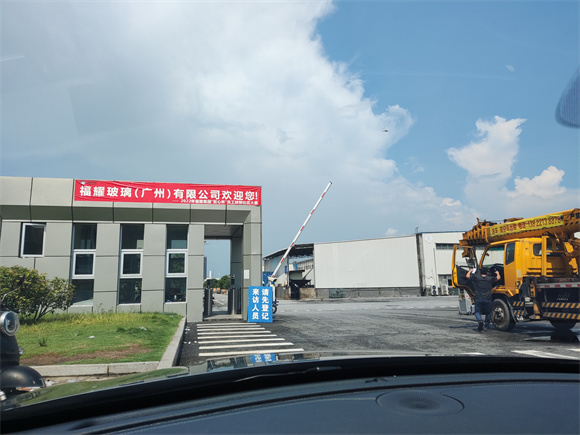
fy2


After a period of use, Fuyao Glass's factory management praised the cleaning equipment provided by Siben. They reported that the machine delivers outstanding cleaning results, thoroughly removing all types of floor stains and leaving the workshop looking brand new. Its simple operation also allowed staff to get up to speed quickly, saving valuable training time.


Siben's after-sales service earned equally high acclaim. Whether for equipment commissioning, maintenance, or troubleshooting, Siben's support team responded promptly, resolving issues swiftly to ensure uninterrupted equipment performance.


This partnership not only allowed Siben to supply premium cleaning equipment to an automotive glass manufacturing facility but also established a long-term cooperative relationship. Siben understands that cooperation with customers is more than a one-time transaction—it is about building and maintaining trust.


Through this collaboration, Siben gained invaluable experience and strengthened its commitment to providing efficient, reliable cleaning solutions to more manufacturing plants. Moving forward, Siben will continue to strive for innovation and product improvement, enhance after-sales service quality, and work hand-in-hand with more enterprises to boost production efficiency and product quality, contributing its strength to industrial development.


NEWS
How to Choose Cleaning Equipment for Hospitals & Schools: Robots Handle Fixed Routes, Humans Handle Judgment
2026 / - 11 / - 05

Facilities putting cleaning robots into hospitals and schools often fall into two extremes — "buy it and we can fire the cleaners" or "mixed human-robot environments are too risky, robots are useless." Both are wrong. The right approach is: robots run stable, repetitive, pre-authorised routes; humans handle anything that needs judgment. This article lays out a four-part framework you can execute directly.

The Gauge Is Not the Ground: Five Links That Steal High-Pressure Cleaning Force
2026 / - 11 / - 04

Pressure at the pump outlet is not pressure at the surface. Force is lost across five links: the pump curve, hose length, fitting bore, nozzle orifice and operator standoff. This guide shows how to test each link in minutes, why a nozzle is a consumable rather than an accessory, and how to record a test-patch baseline so acceptance is repeatable instead of subjective.

Auto Service Bay Cleaning: Zone by Water, Not by Habit, Then Prove It
2026 / - 10 / - 20

Most workshop cleaning fails because one mop travels the whole floor. A bay that holds oil, a booth that holds overspray and a high-voltage bay that must stay dry need different methods, tools and sign-offs. This guide sets one zoning test, walks through four zone types, covers waste and wash water, and closes with three records that make the work provable.

Repair or Replace Cleaning Equipment: Retire the Old Unit, Then Accept the New One
2026 / - 10 / - 21

Most fleets do not fail at buying; they fail at retiring. A machine that still turns may no longer belong on that floor, and an old unit hauled away without records can return as a liability. This guide gives four tests for keep-or-replace, three price anchors for resale, the fork between scrap and transfer, battery handover, star clauses in tenders, and a three-sign-off acceptance.

Robot Floor Scrubbers: How to Verify Cleaning Quality on Site
2026 / - 10 / - 22

Coverage data proves a robot drove somewhere, not that the floor is clean. This guide splits cleanliness into four measurable values, classifies soil into four types, and describes three low-cost field tests. It then explains how to code sampling points, keep results stable across shifts, assign cause when a check fails, and write acceptance criteria into a service contract.

Warehouse Dust Cleaning That Survives an Inspection: Three Heights, Three Cycles, One Signed Card
2026 / - 10 / - 23

Most warehouse cleaning rules mention floors and stop there. Dust settles where airflow is slow, on rack beams, light fittings and cable trays. This guide splits a warehouse into three height bands, maps each band to per-shift, weekly and monthly cycles, and shows how to prove the work was done using a cloth test, a weighing test and a re-settling check.

Factory Floor Oil Management: Containment, Recovery, and Slip Prevention
2026 / - 10 / - 26

Oil on a factory floor is a chain problem, not a mop problem. This guide traces four oil sources (equipment leaks, maintenance work, drum handling, vehicles), sets up three control lines, introduces a three-tier leak log, explains containment hardware like drip trays and spill pallets, lays out a five-step recovery order, and shows how to manage slip risk, choose machines for each stage, and prove where the oily waste went.

Where Cleaning Budgets Leak: Over-Washing, Over-Processing and the Wrong Hour
2026 / - 11 / - 03

Most industrial cleaning budgets do not leak at the machine. They leak at three switches nobody audits: whether to clean, how to clean, and when. This guide separates frequency from soil load, ladders processes from dry pickup to chemical cleaning, and maps movable load onto time-of-use windows — closing with four metrics and three contract clauses that make savings auditable.