Collaboration Journey: Guangzhou Siben Environmental Technology Co., Ltd. and LukFook Jewellery (Guangzhou) Co., Ltd. in Equipment Procurement

Author: Site Editor     Publish Time: 2021-04-04      Origin: Site

Inquire

As a leader in the cleaning equipment industry, Guangzhou Siben Environmental Technology Co., Ltd. has consistently delivered efficient, user-friendly, and reliable industrial floor cleaning solutions. In its partnership with Luk Fook Jewellery (Guangzhou) Co., Ltd., we leveraged our expertise to provide premium equipment, empowering the jeweler to cultivate pristine and elegant retail environments.


LF1


Renowned for its exquisite jewelry, Luk Fook places paramount importance on maintaining immaculate store aesthetics. With rapid business expansion, traditional cleaning methods proved inadequate to meet escalating demands for efficiency and quality. This prompted the company to adopt advanced cleaning technology to elevate its sanitation standards.  


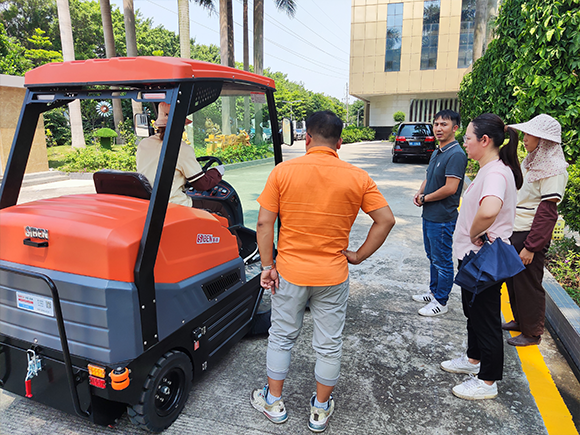
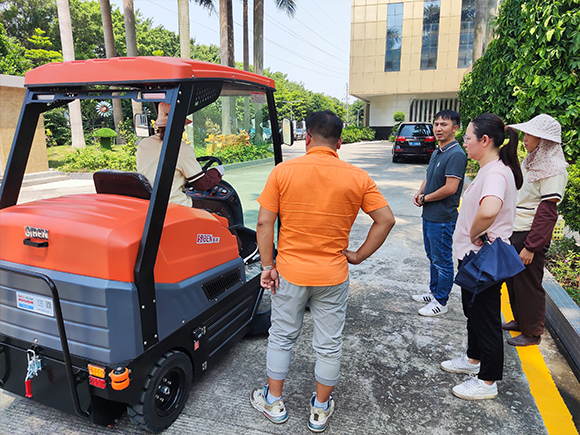
Upon understanding Luk Fook's needs, Siben promptly initiated contact and deployed a specialized team for onsite assessments. Through meticulous analysis of store layouts, cleaning requirements, and operational scenarios—coupled with in-depth discussions with management—we curated a tailored selection of industrial floor scrubbers, sweepers, and industrial vacuum cleaners. These machines combine cutting-edge performance, intuitive operation, and exceptional versatility to tackle diverse cleaning challenges.  

LF2


Throughout the collaboration, Siben offered end-to-end support. We conducted comprehensive operator training to ensure seamless equipment adoption and implemented robust after-sales services, including routine maintenance, servicing, and prompt fault resolution, guaranteeing sustained peak performance.  


The integration of Siben's equipment revolutionized Luk Fook's cleaning operations. Floor scrubbers and sweepers achieved thorough, rapid surface cleaning, while industrial vacuums effectively eliminated dust and microparticles, enhancing indoor air quality. Together, these upgrades elevated the store's ambiance and provided customers with a more comfortable, enjoyable shopping experience.  

LF3


For Siben, this partnership underscored our technical prowess and deepened industry insights. Remaining true to our "customer-centric approach and commitment to quality," we will continue refining products and services to deliver unparalleled cleaning solutions globally.  


Looking ahead, Siben eagerly anticipates long-term collaborations with Luk Fook and other clients. By staying attuned to market trends and technological advancements, we strive to drive innovation in the cleaning sector and contribute to sustainable development worldwide.


NEWS
Before You Sign: A Receiving Inspection and Commissioning Checklist for Industrial Cleaning Equipment
2026 / - 11 / - 06

An industrial cleaning machine costs the most on delivery day: defects found before signing stay with the vendor, after signing they become warranty tickets. This checklist covers the receiving window — match contract, packing list and certificates; check damage and parts; verify nameplate data against the contract; run empty, then loaded trials on your floor; confirm training and spares handover; sign an itemized acceptance sheet; log warranty and claim dates; add certificate checks in dusty areas; watch the run-in week.

How to Choose Cleaning Equipment for Hospitals & Schools: Robots Handle Fixed Routes, Humans Handle Judgment
2026 / - 11 / - 05

Facilities putting cleaning robots into hospitals and schools often fall into two extremes — "buy it and we can fire the cleaners" or "mixed human-robot environments are too risky, robots are useless." Both are wrong. The right approach is: robots run stable, repetitive, pre-authorised routes; humans handle anything that needs judgment. This article lays out a four-part framework you can execute directly.

The Gauge Is Not the Ground: Five Links That Steal High-Pressure Cleaning Force
2026 / - 11 / - 04

Pressure at the pump outlet is not pressure at the surface. Force is lost across five links: the pump curve, hose length, fitting bore, nozzle orifice and operator standoff. This guide shows how to test each link in minutes, why a nozzle is a consumable rather than an accessory, and how to record a test-patch baseline so acceptance is repeatable instead of subjective.

Auto Service Bay Cleaning: Zone by Water, Not by Habit, Then Prove It
2026 / - 10 / - 20

Most workshop cleaning fails because one mop travels the whole floor. A bay that holds oil, a booth that holds overspray and a high-voltage bay that must stay dry need different methods, tools and sign-offs. This guide sets one zoning test, walks through four zone types, covers waste and wash water, and closes with three records that make the work provable.

Repair or Replace Cleaning Equipment: Retire the Old Unit, Then Accept the New One
2026 / - 10 / - 21

Most fleets do not fail at buying; they fail at retiring. A machine that still turns may no longer belong on that floor, and an old unit hauled away without records can return as a liability. This guide gives four tests for keep-or-replace, three price anchors for resale, the fork between scrap and transfer, battery handover, star clauses in tenders, and a three-sign-off acceptance.

Robot Floor Scrubbers: How to Verify Cleaning Quality on Site
2026 / - 10 / - 22

Coverage data proves a robot drove somewhere, not that the floor is clean. This guide splits cleanliness into four measurable values, classifies soil into four types, and describes three low-cost field tests. It then explains how to code sampling points, keep results stable across shifts, assign cause when a check fails, and write acceptance criteria into a service contract.

Warehouse Dust Cleaning That Survives an Inspection: Three Heights, Three Cycles, One Signed Card
2026 / - 10 / - 23

Most warehouse cleaning rules mention floors and stop there. Dust settles where airflow is slow, on rack beams, light fittings and cable trays. This guide splits a warehouse into three height bands, maps each band to per-shift, weekly and monthly cycles, and shows how to prove the work was done using a cloth test, a weighing test and a re-settling check.

Factory Floor Oil Management: Containment, Recovery, and Slip Prevention
2026 / - 10 / - 26

Oil on a factory floor is a chain problem, not a mop problem. This guide traces four oil sources (equipment leaks, maintenance work, drum handling, vehicles), sets up three control lines, introduces a three-tier leak log, explains containment hardware like drip trays and spill pallets, lays out a five-step recovery order, and shows how to manage slip risk, choose machines for each stage, and prove where the oily waste went.