
How to Choose Low-Noise Industrial Cleaning Equipment for Malls, Hospitals, and Schools Based on Cleaning Conditions
Author: SIBEN Publish Time: 2026-08-21 Origin: Site
In modern urban management, shopping malls, hospitals, and schools are high-traffic public spaces that demand exceptionally high standards for cleaning efficiency, safety, and environmental quality. However, these environments are extremely sensitive to noise control—hospitals require quiet conditions for patient recovery, schools need to maintain classroom order, and shopping malls strive to provide a comfortable shopping experience for their customers.
Therefore, scientifically choosing low-noise industrial cleaning equipment (such as silent scrubber-dryers and sweepers) tailored to the specific working conditions of each venue has become a core task for property management and logistics procurement.
I. Shopping Malls: Balancing High Traffic with High Efficiency and Aesthetics
1. Working Condition Characteristics
- Spacious layouts and complex traffic flows: Malls typically feature wide corridors, which often intersect with atriums, corners, and dense customer traffic.
- Special time windows: To avoid disrupting business operations, cleaning is mostly conducted in the early morning before opening or late at night after closing. Some high-end malls also allow localized maintenance during off-peak daytime hours.
- Diverse flooring materials: Mostly marble, tile, granite, etc., requiring exceptionally high standards for slip resistance and quick drying.
2. Selection Strategies and Recommendations
- Equipment Type: Medium walk-behind or compact ride-on scrubber-dryers are the top choice. Ride-on equipment can significantly boost large-area cleaning efficiency prior to opening.
- Noise Standards: Operating noise should ideally be controlled below 65 dB, ensuring that even during occasional daytime operations, it does not cause customer annoyance.
- Key Features:
- Equipped with an Eco silent mode to further reduce vacuum motor noise while maintaining cleaning performance.
- Excellent water recovery and powerful squeegee design to ensure floors are "dry immediately after washing," preventing customer slips and falls.
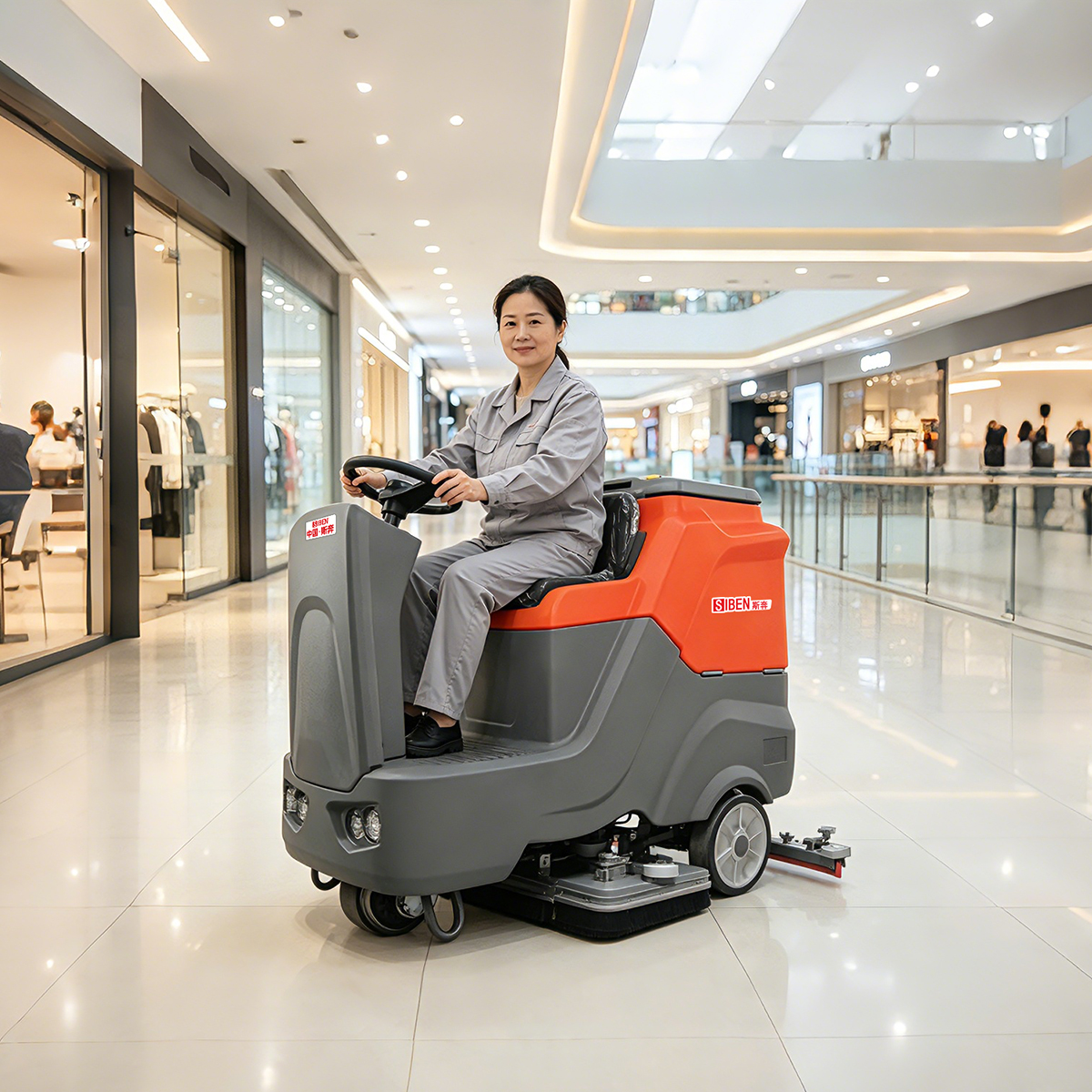
( Shopping Mall Floor Scrubber X8 )
II. Hospitals: Strict Silence and Hygiene Standards
1. Working Condition Characteristics
- 24/7 noise sensitivity: Wards, outpatient departments, and hallways are highly sound-sensitive areas where noise directly interferes with patient rest and doctor-patient communication.
- High hygiene and epidemic prevention standards: Floors must not only be clean, but also disinfected thoroughly using cleaning solutions without generating secondary dust or odors.
- Dynamic spaces: Waiting areas are crowded, while hallways and corridors are relatively narrow.
2. Selection Strategies and Recommendations
- Equipment Type: Ultra-silent walk-behind scrubber-dryers or compact equipment with a small turning radius (chassis width ideally under 60 cm for easy passage through elevators and narrow corridors) are recommended.
- Noise Standards: Must feature ultra-low noise levels of around 60 dB or even 56 dB (utilizing products with multiple sound-absorbing air ducts or automotive-grade noise reduction materials) to ensure operations near wards are virtually silent.
- Key Features:
- Solution and recovery tanks made of non-toxic, eco-friendly, and antibacterial materials.
- Precise water flow control and multi-dimensional water distribution structures to avoid chemical residue and excessively wet floors.
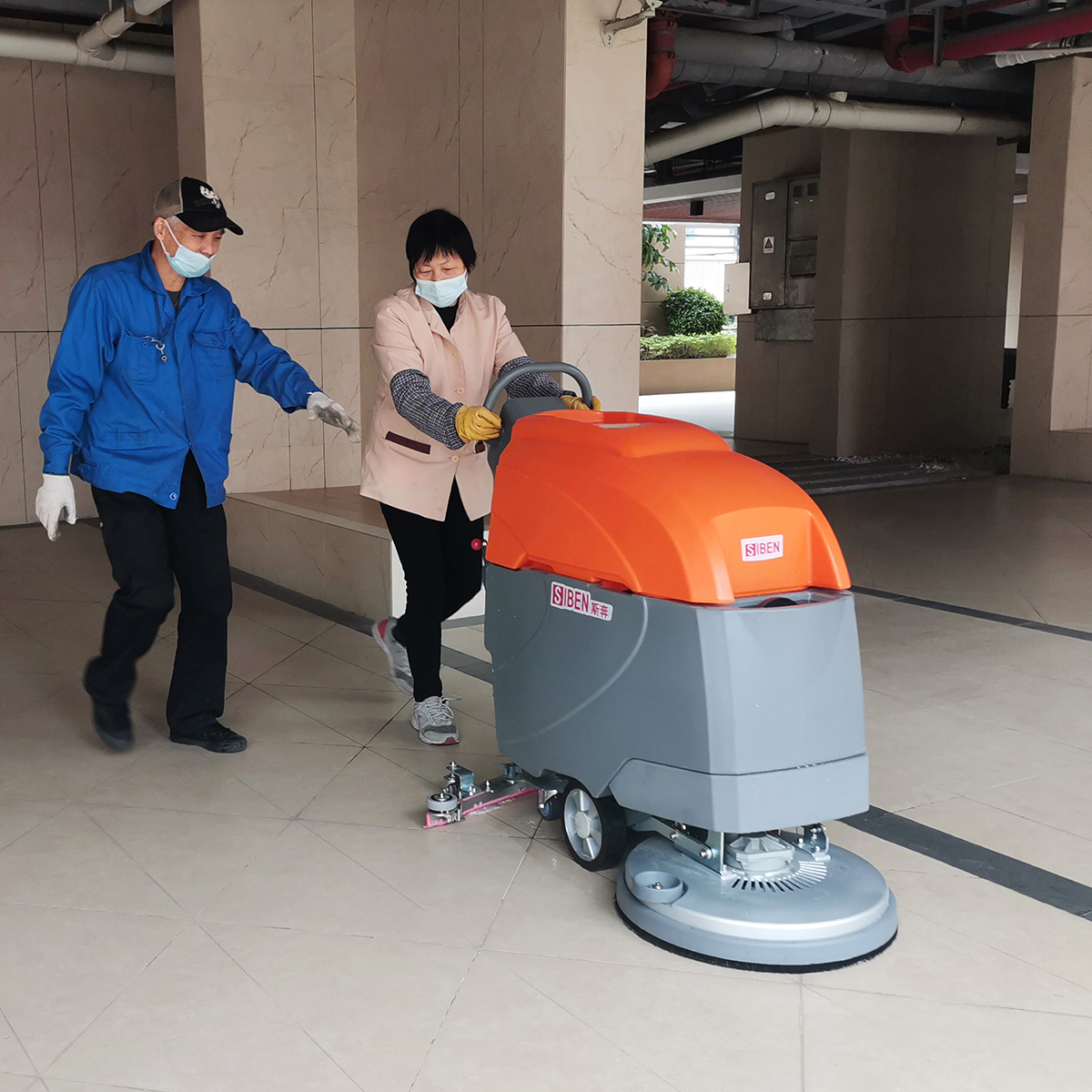
( Hospital Floor Scrubber X5 )
III. Schools: Balancing Teaching Order and Multi-Area Adaptability
1. Working Condition Characteristics
- Highly concentrated time periods: High decibel noise is strictly prohibited during class changes, transition periods, and study hours in teaching buildings and libraries. Meanwhile, sports fields, cafeterias, and outdoor main roads face heavy loads of fallen leaves, gravel, and other complex debris.
- Large spatial span: Encompasses indoor corridors, classrooms (mostly PVC sports flooring or terrazzo), gymnasiums, and outdoor playgrounds.
2. Selection Strategies and Recommendations
- Equipment Type:
- Indoor teaching buildings/libraries: Equip with ultra-silent walk-behind scrubber-dryers or silent wet/dry vacuum cleaners.
- Outdoor playgrounds/main roads: Choose medium-to-large ride-on sweepers to balance efficiency with dust control.
- Noise Standards: Indoor cleaning equipment noise should be controlled around 60 dB, ensuring machinery cannot be heard from nearby classrooms.
- Key Features:
- Easy operation and high safety standards (featuring anti-crush and emergency stop protections).
- Brush pressure adjustment functions for PVC plastic flooring or epoxy resin surfaces to prevent floor damage.
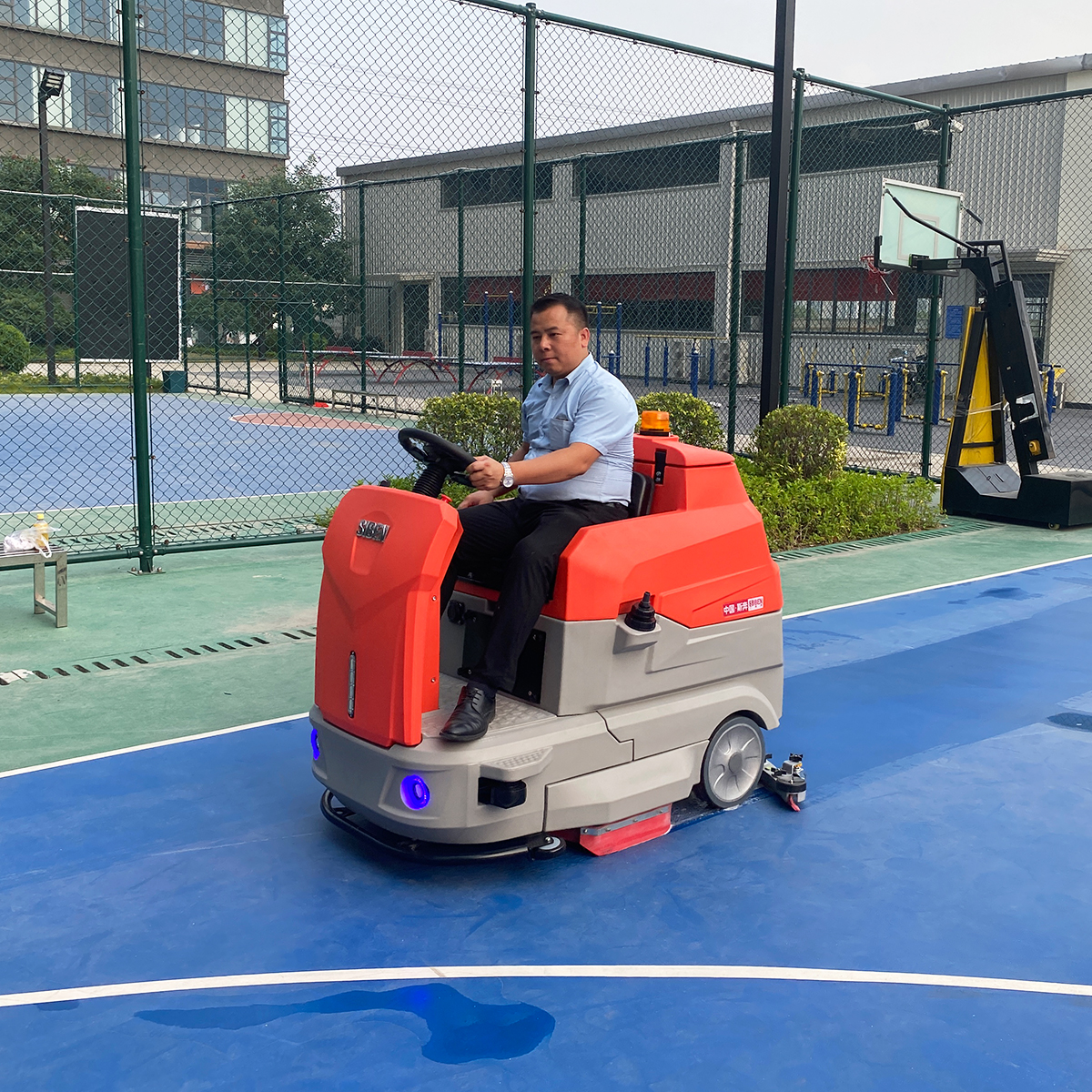
( School Floor Scrubber Erlang Shen )
Summary: Core Selection Comparison Table
| Venue | Core Working Condition Pain Points | Recommended Equipment Form | Noise Control Threshold | Key Focus Areas |
| Malls | Efficiency priority, marble slip resistance | Walk-behind / Compact ride-on scrubbers | $< 65\text{dB}$ | Quick drying, no water flinging on turns |
| Hospitals | 24/7 sound sensitivity, epidemic prevention | Ultra-silent walk-behind scrubbers | $\le 60\text{dB}$ | Extreme silence, antibacterial materials, narrow passage clearance |
| Schools | Interclass silence, indoor/outdoor versatility | Silent scrubbers + Outdoor sweepers | $\le 60\text{dB}$ | Simple operation, adaptability to multi-material floors |
When procuring low-noise cleaning equipment for malls, hospitals, and schools, avoid a "one-size-fits-all" approach based solely on price or single parameters. Only by deeply analyzing the noise thresholds, corridor widths, flooring materials, and operational time windows of specific working conditions can you select a high-performance cleaning solution that truly fits.
What types of flooring noise or cleaning challenges is your institution currently facing in equipment selection?

