Ride-on Scrubber Dryer X8 Empowers GALUMINIUM GROUP’s Underground Parking Garage with a Premiere Transformation

Author: Siben     Publish Time: 2024-04-16      Origin: Site

Inquire

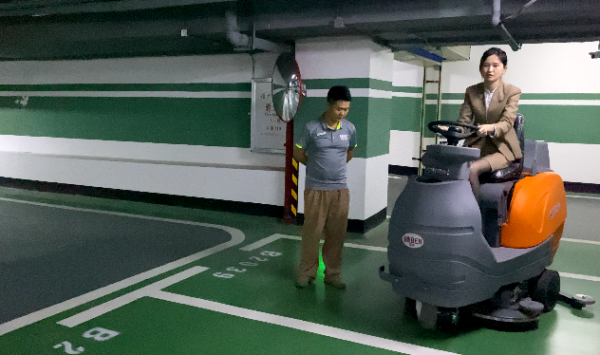
Guangzhou Siben Environmental Technology Co., Ltd. — a front-runner in the cleaning-equipment industry — has long enjoyed market-wide recognition for premium products and professional service. Recently, we teamed up with GAluminum Group to introduce our ride-on scrubber X8 into their underground car park, creating a spotless, bright parking environment.


GAluminum Group, an acknowledged leader in its sector, maintains exacting standards for underground-parking cleanliness. Traditional methods could no longer deliver the speed and thoroughness required, so the group decided to invest in advanced cleaning technology to boost both efficiency and results.

GA2


After learning about our ride-on scrubber  X8, GAluminum showed immediate interest. With a cleaning path of nearly one metre, the X8 easily handles large surface areas. Its integrated scrub-and-dry design works "wet-and-go," leaving floors dry and mark-free in a single pass. Dust, oil stains and tyre marks are removed effortlessly, giving the car park a brand-new look.


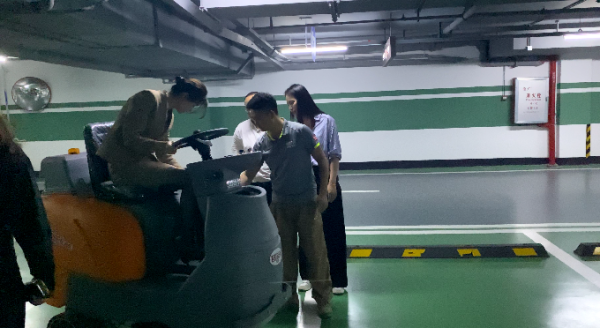
Thanks to close cooperation between both teams, the X8 was successfully deployed on site. In daily use the machine has proved outstanding: operators find it simple to drive, cleaning productivity has soared, and overall floor quality has risen markedly — earning unanimous praise from the client.

GA3


This project not only underlines Siben's professional strength in the cleaning-equipment field but also deepens our partnership with GAluminum Group. We are confident that the two sides will continue working together to advance the cleaning industry in the years ahead.


Guangzhou Siben Environmental Technology Co., Ltd. will keep pursuing its "quality first, customer first" philosophy, innovating and striving to provide ever more customers with high-performance cleaning equipment and services.


NEWS
Before You Sign: A Receiving Inspection and Commissioning Checklist for Industrial Cleaning Equipment
2026 / - 11 / - 06

An industrial cleaning machine costs the most on delivery day: defects found before signing stay with the vendor, after signing they become warranty tickets. This checklist covers the receiving window — match contract, packing list and certificates; check damage and parts; verify nameplate data against the contract; run empty, then loaded trials on your floor; confirm training and spares handover; sign an itemized acceptance sheet; log warranty and claim dates; add certificate checks in dusty areas; watch the run-in week.

How to Choose Cleaning Equipment for Hospitals & Schools: Robots Handle Fixed Routes, Humans Handle Judgment
2026 / - 11 / - 05

Facilities putting cleaning robots into hospitals and schools often fall into two extremes — "buy it and we can fire the cleaners" or "mixed human-robot environments are too risky, robots are useless." Both are wrong. The right approach is: robots run stable, repetitive, pre-authorised routes; humans handle anything that needs judgment. This article lays out a four-part framework you can execute directly.

The Gauge Is Not the Ground: Five Links That Steal High-Pressure Cleaning Force
2026 / - 11 / - 04

Pressure at the pump outlet is not pressure at the surface. Force is lost across five links: the pump curve, hose length, fitting bore, nozzle orifice and operator standoff. This guide shows how to test each link in minutes, why a nozzle is a consumable rather than an accessory, and how to record a test-patch baseline so acceptance is repeatable instead of subjective.

Auto Service Bay Cleaning: Zone by Water, Not by Habit, Then Prove It
2026 / - 10 / - 20

Most workshop cleaning fails because one mop travels the whole floor. A bay that holds oil, a booth that holds overspray and a high-voltage bay that must stay dry need different methods, tools and sign-offs. This guide sets one zoning test, walks through four zone types, covers waste and wash water, and closes with three records that make the work provable.

Repair or Replace Cleaning Equipment: Retire the Old Unit, Then Accept the New One
2026 / - 10 / - 21

Most fleets do not fail at buying; they fail at retiring. A machine that still turns may no longer belong on that floor, and an old unit hauled away without records can return as a liability. This guide gives four tests for keep-or-replace, three price anchors for resale, the fork between scrap and transfer, battery handover, star clauses in tenders, and a three-sign-off acceptance.

Robot Floor Scrubbers: How to Verify Cleaning Quality on Site
2026 / - 10 / - 22

Coverage data proves a robot drove somewhere, not that the floor is clean. This guide splits cleanliness into four measurable values, classifies soil into four types, and describes three low-cost field tests. It then explains how to code sampling points, keep results stable across shifts, assign cause when a check fails, and write acceptance criteria into a service contract.

Warehouse Dust Cleaning That Survives an Inspection: Three Heights, Three Cycles, One Signed Card
2026 / - 10 / - 23

Most warehouse cleaning rules mention floors and stop there. Dust settles where airflow is slow, on rack beams, light fittings and cable trays. This guide splits a warehouse into three height bands, maps each band to per-shift, weekly and monthly cycles, and shows how to prove the work was done using a cloth test, a weighing test and a re-settling check.

Factory Floor Oil Management: Containment, Recovery, and Slip Prevention
2026 / - 10 / - 26

Oil on a factory floor is a chain problem, not a mop problem. This guide traces four oil sources (equipment leaks, maintenance work, drum handling, vehicles), sets up three control lines, introduces a three-tier leak log, explains containment hardware like drip trays and spill pallets, lays out a five-step recovery order, and shows how to manage slip risk, choose machines for each stage, and prove where the oily waste went.