
SIBEN Autonomous Floor Scrubbing Robot Empowers Electronic Component Enterprise to Achieve 24/7 Clean Production
Author: Siben Publish Time: 2025-12-31 Origin: Site
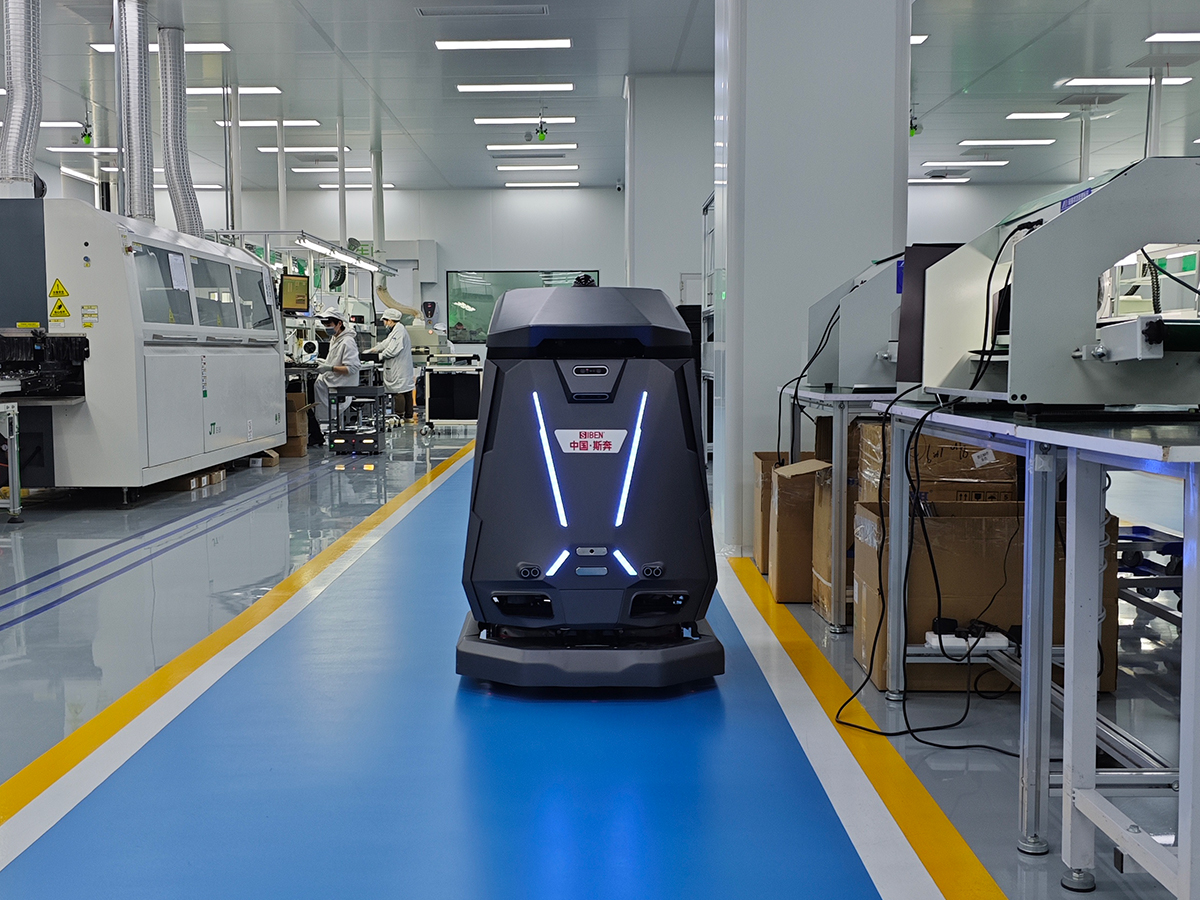
In the field of electronic component manufacturing, production environment cleanliness directly impacts product quality stability and operational efficiency. The R&D and mass production of high-precision components demand strict control over workshop dust, micro-particles, and oil contamination. However, 24/7 continuous production models have intensified the challenges of maintaining cleanliness. Recently, SIBEN's autonomous floor scrubbing robot Thunder God was successfully deployed at a large-scale electronic component manufacturer in Jiangsu, precisely addressing its core cleaning pain points and establishing an efficient, stable clean production environment.
I. Client Background: Rigorous Cleanliness Demands in High-Precision Manufacturing
The client is a leading electronic component manufacturer in Jiangsu, specializing in R&D and mass production of high-precision components. It operates a 5,000-square-meter dust-free workshop, along with multiple supporting production and packaging areas. Due to frequent material handling and equipment maintenance, floors accumulate dust, micro-particles, and minor oil stains, posing persistent threats to cleanliness standards.
II. Core Challenges: Cleaning Bottlenecks Under 24/7 Operations
Operating around-the-clock, the client faced dual bottlenecks in cleaning efficiency and quality:
Traditional methods fall short: Reliance on 4-5 cleaners using manual sweeping and suboptimal scrubbers left residual dust, failing to meet dust-free standards.
Nighttime gaps: Additional staffing for off-hours cleaning increased company costs, creating a critical imbalance between production and sanitation needs.
III. Customized Solution: SIBEN Thunder God Robot Breaks Through
To tackle these issues, SIBEN conducted on-site assessments and tailored a smart cleaning solution centered on the Thunder God autonomous floor scrubbing robot.
1. Tech-Driven Efficiency & Precision
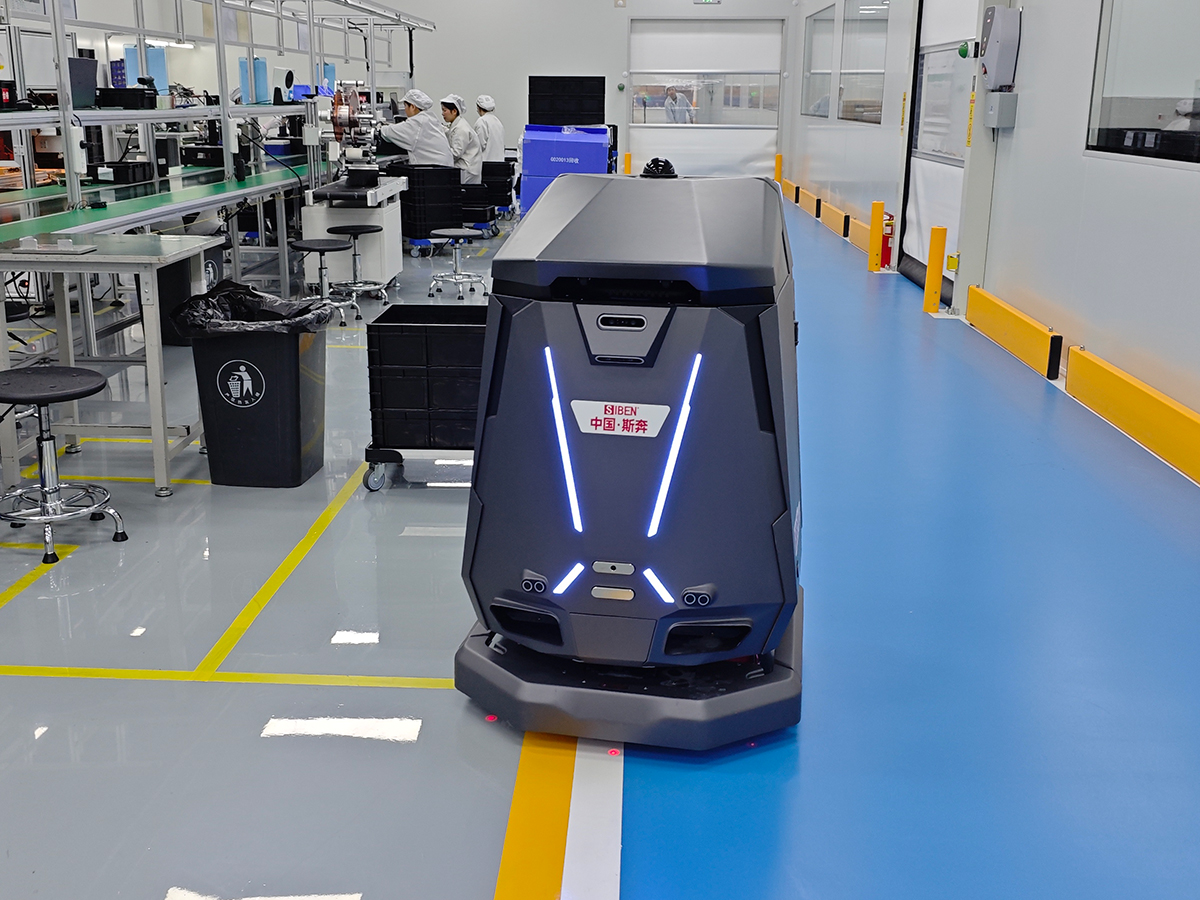
Autonomous operation: Equipped with SLAM, 3D vision, and 10+ advanced technologies, Thunder God navigates complex environments, achieving 1,800 m²/hour cleaning capacity.
Seamless 24/7 workflow: With optional charging stations, it automates water refilling, sewage disposal, and battery charging. Smart elevator integration enables unattended overnight operations, closing nighttime gaps.
Multifunctional design: Combines scrubbing, drying, and dust mopping to remove diverse contaminants, ensuring micron-level precision compliant with dust-free standards.
2. Smart Maintenance & Value-Added Services
Effortless deployment: Free on-site surveys, customized route planning, and one-click task initiation simplify operations.
Safety & durability: 360° sensors, collision avoidance, and rugged designs ensure safe navigation. Magnetic disc brushes and 24V/50AH fast-charging batteries enable rapid part replacement and minimal downtime.
Comprehensive support: Cloud-based remote diagnostics, and automated cleaning reports for data-driven management.
IV. Results: 50% Cleaning Efficiency Gain, Fully Automated Clean Production
The client achieved transformative outcomes:
50% higher efficiency: Dust-free zones now maintain uninterrupted cleanliness, eliminating nighttime gaps and labor dependency.
Consistent quality: Automated processes outperform manual methods in speed, residue reduction, and compliance.
Cost optimization: Reallocation of labor resources reduced operational expenses while enhancing productivity.
V. Client Endorsement: Cost-Effective & Reliable Cleanliness
Mr. Wang, Director of Production, praised SIBEN's solution: "Thunder God has revolutionized our sanitation workflow, delivering both cost savings and uncompromising cleanliness."
VI. Innovation Drives Industrial Upgrade
As competition tightens in high-precision manufacturing, clean production environments become vital differentiators. SIBEN remains committed to leveraging AI, robotics, and customization expertise to empower industries worldwide. By solving niche cleaning challenges, we help enterprises achieve "cost efficiency, operational excellence, and premium quality"—paving the way for sustainable industrial advancement.

