Siben X3 & Erlang Shen: Driving Efficiency Leap for Jianji Property's Parking Garages

Author: Siben     Publish Time: 2024-02-04      Origin: Site

Inquire

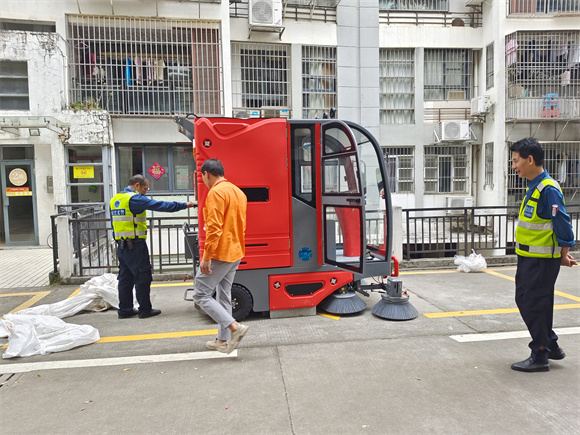
Since its founding, Guangdong Jianji Property Management Service Co., Ltd. has been committed to delivering first-class property-management solutions. To raise cleaning standards in the underground garages, they have partnered with us, Guangzhou Siben Environmental Technology Co., Ltd. and purchased the X3 scrubber-dryer and Erlang Shen ride-on floor sweeper.

JJ1


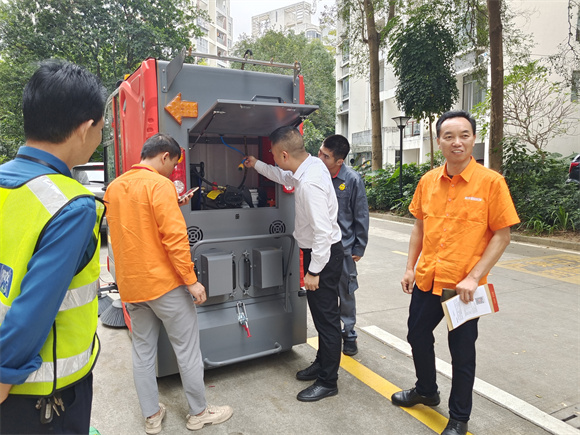
Renowned for high productivity and advanced engineering, the X3 easily handles the toughest demands of car-park floor care. The Erlang Shen, praised for rock-solid reliability and energy-saving technology, provides an eco-friendly complement to the fleet.

JJ2


We are confident these state-of-the-art machines will give Jianji Property a brand-new cleaning experience.


JJ3


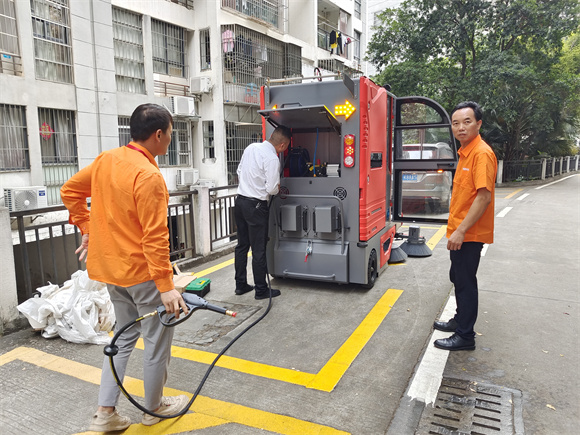
This cooperation is far more than a simple purchase; it is a joint opportunity for continuous improvement. Together we will elevate the benchmark for underground-garage hygiene and create a fresher, more comfortable parking environment for every user.

JJ4


Siben Environmental Technology looks forward to working hand-in-hand with Guangdong Jianji Property Management to beautify our cities and contribute to a cleaner, greener future.


NEWS
Oil Mist & Floor Oil Contamination Control in Machining & Stamping Workshops: Nine Steps
2026 / - 10 / - 12

This article focuses on the simultaneous management of oil mist and ground oil contamination in machining and stamping workshops, structured into nine key steps: source identification; source capture and exhaust via hoods, branch ducts, main ducts, and fans; anti-slip ground oil cleaning (dry-first, wet-second); cutting fluid tramp oil separation and reuse; classified temporary storage and transfer ledgers for oily waste liquids; cleaning tool configuration (industrial vacuum cleaners + floor scrubbers + pressure washers); operating time slots and environmental compliance control windows; inclusion of cleaning equipment in project procurement lists and three-stage acceptance. It incorporates verified parameters of SIBEN's XC-series industrial vacuums, X-series floor scrubbers, and C-series pressure washers as selection references.

Warehouse & Workshop Dust Cleaning Compliance Guide: Eight Steps from System to Documentation
2026 / - 10 / - 09

This article outlines the compliance pathway for dust cleaning and management in industrial and trade enterprises, structured across eight key phases: cleaning systems and protocols (assigning responsibilities, target areas, frequency, and record-keeping), frequency and shift scheduling (zoned according to dust generation intensity), blind spots and high-level dust accumulation checklists, cleaning tool configuration (replacing compressed air purging with industrial vacuum cleaners and implementing wet floor scrubbing), secondary dust control and waste transfer, auxiliary inspection of dust removal systems, five categories of record-keeping logs, and compliance self-inspection checklists. Verified parameters of SIBEN's XC-series industrial vacuum cleaners and X-series floor scrubbers are integrated for equipment selection reference.

Lithium Battery Factory Floor Cleaning Solutions: Siben Industrial Sweepers & Scrubbers for Clean, Safe EV Production
2026 / - 09 / - 30

This article explains the unique floor-cleaning challenges of lithium battery production — conductive powder hazards, epoxy coating protection, and moisture/electrolyte control — and shows how a two-stage "sweep then scrub" workflow solves them. It details the Siben A300 (5580㎡/h), A600 (9500㎡/h) and A900 lithium-ion sweeper (16000-22000㎡/h, 5-6 hour runtime) together with X-series scrubbers, and provides selection guidance and an FAQ for facility and EHS managers.

How to Choose Cleaning Equipment for Auto Repair Workshops & 4S Stores: Start with 4 Contaminant Types & 5 Functional Zones
2026 / - 10 / - 06

This article proposes a "classify first, then zone" equipment selection framework for complex cleaning scenarios in auto repair workshops and 4S service centers. It first identifies four contaminant types (oil, dust, paint, mud) and their corresponding cleaning strategies, then provides equipment configuration recommendations for five functional zones — service bays & lifts, body & sanding stations, paint mixing & spray booths, car wash area, and customer reception & showroom. It also covers wet/dry separation principles, electrical & charging safety boundaries, consumables record-keeping, and six quantifiable procurement acceptance criteria, helping readers build a compliant, efficient and practical workshop cleaning system from scratch.

How to Procure and Inspect Industrial Cleaning Equipment: 6 Stages from Requirements to Final Acceptance
2026 / - 10 / - 07

This article treats industrial cleaning equipment procurement as a "mini-project," systematically breaking down six stages: requirements writing, technical parameter classification, supplier evaluation, three-level acceptance, hard contract clauses, and compliance documentation. The core approach is to translate "what to buy" into "what problem to solve," distinguish verifiable parameters from reference-only claims, evaluate suppliers through a scoring system, implement factory/delivery/final acceptance stages, and secure the deal with four contract clauses: payment tied to acceptance, warranty response, spare parts supply, and training. The article concludes with 10 FAQ and actionable checklists.

Commercial Cleaning Robot Deployment and Maintenance: A 7-Stage Guide from Site Conditions to Maintenance Ledger
2026 / - 10 / - 08

This article systematically breaks down seven stages of commercial cleaning robot deployment and long-term operation: confirming floor/traffic/network/management conditions before deployment; managing maps as versioned assets; defining physical, human-robot, and emergency safety boundaries; replacing consumables on cycle rather than on feel with proper battery management; grading faults into three levels with human-robot handoff rules; planning task allocation and resource queuing for multi-robot scenarios; and using six ledger types and four dashboard metrics for auditable maintenance management. The core thesis is that a cleaning robot is not a "black box" that runs itself once plugged in — long-term stable operation depends on whether deployment conditions are met, whether maps keep up with site changes, whether consumables are replaced on schedule, and how humans and machines hand off during faults. Includes 10 FAQ and a remote support CTA.

Industrial Cleaning Equipment Noise Control Technology: The Engineering Behind 60dB Quiet Cleaning
2026 / - 09 / - 29

This article breaks down the four core noise control technologies that enable Siben's industrial sweepers to achieve 60 dB(A) operation — equivalent to normal conversation. Through detailed engineering analysis of motor vibration isolation, brush system acoustics, airflow and filtration design, and chassis sound insulation, it explains how the A300 (2000W, 320kg) and A600 (3780W, 590kg) maintain identical 60dB noise levels despite vastly different power outputs. Real-world deployment cases in noise-sensitive environments like schools and commercial spaces demonstrate the practical value of low-noise industrial cleaning equipment.

Siben Manufacturing Craftsmanship: The Quality Assurance System Behind Industrial Cleaning Equipment
2026 / - 09 / - 28

This article reveals how Siben manufactures industrial cleaning equipment through rigorous engineering standards, an 8-stage quality control pipeline, and a comprehensive after-sales service network. It covers the Thunder God AMR autonomous cleaning robot, A-Series ride-on sweepers (A300/A600/A900), and X-Series floor scrubbers, helping procurement decision-makers understand why manufacturing quality directly impacts equipment lifespan, total cost of ownership, and cleaning performance.