
Foshan Kuang-Chi and Guangzhou Siben: A Success Story in Efficient Cleaning Solutions
Author: Siben Publish Time: 2024-12-12 Origin: Site
In December 2024, Foshan Kuang-Chi Technologies Co., Ltd. reached a pivotal milestone. With its new workshop fully renovated and ready for production, the underground garage prepared for opening, and the need to optimize daily cleaning operations in dormitory and office buildings, the selection of cleaning equipment emerged as a critical factor affecting overall progress and environmental quality. Amid these challenges, Guangzhou Siben Environmental Technology Co., Ltd. distinguished itself through rigorous testing, forging a successful partnership built on efficient cleaning performance.
I. Cleaning Challenges in Complex Scenarios
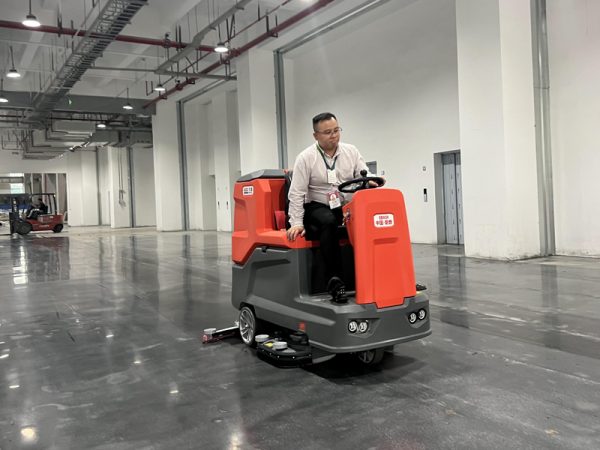
Large Equipment Cleaning Scenarios Requirements: Workshop and Underground Garage
Workshop Cleaning Challenges:
The new workshop at Foshan Kuang-Chi features an expansive floor made of silicon carbide (emery) material. Daily operations involve frequent vehicle traffic that tracks in substantial amounts of mud and sand, creating stubborn stains that compromise both aesthetics and potential equipment performance. Additionally, the workshop entrance includes a sloped design. During the renovation phase, previously rented large floor scrubbers from other brands—plagued by low chassis clearance and weak power—repeatedly stalled on the slopes, severely hampering cleaning efficiency.
Underground Garage Cleaning Demands:
The underground garage also spans a vast area with a complex layout, including a special terrain configuration featuring an S-curve connecting to a steep ramp. Conventional large scrubbers struggle with such conditions due to insufficient steering flexibility and inadequate climbing power, making comprehensive and efficient cleaning impossible and failing to meet strict cleanliness standards before the garage's opening. Based on these extensive cleaning requirements for both workshop and garage, Foshan Kuang-Chi specified the need for large floor scrubbers of the same model, with a mandatory cleaning and water absorption width of at least 1.2 meters to ensure efficient, deep cleaning of large areas.
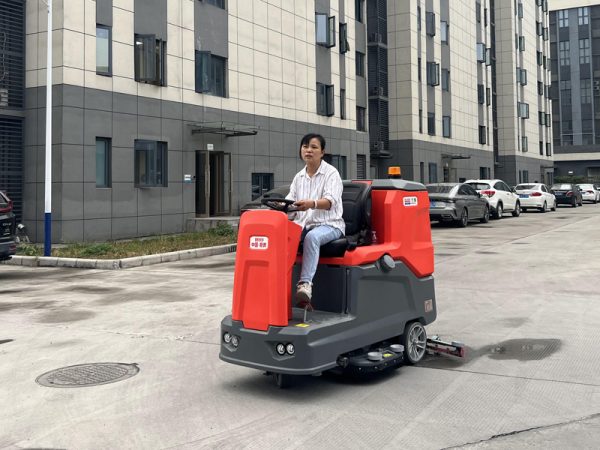
Compact Equipment Requirements: Dormitory and Office Building Corridors
The corridors in dormitory and office buildings measure only 1.8 meters in width, creating extremely narrow spaces. Previously used cleaning equipment was too bulky to maneuver or turn around effectively, resulting in poor operational convenience and low efficiency. This made timely dust and stain removal impossible, compromising public area cleanliness. Consequently, an urgent need arose for a compact cleaning solution that could navigate limited spaces while maintaining effective cleaning performance.
II. Siben Equipment's Impressive Performance
Responding to these complex and diverse requirements, the client's team carefully screened and invited two cleaning equipment suppliers for on-site demonstrations. Siben Cleaning Equipment emerged as a dark horse, fully meeting all requirements with outstanding performance and winning immediate favor.
Large Equipment Performance Demonstration
Superior Power and Terrain Adaptability: The Siben large floor scrubber features a high-performance power system delivering strong, stable output. During workshop slope testing, its optimally designed chassis height combined with a high-torque motor easily overcame ramp resistance, completing uphill and downhill operations smoothly—completely eliminating the previous stalling issues. For the underground garage's S-curve and steep ramp, the Siben scrubber demonstrated exceptional flexibility and climbing capability. Its precise, sensitive steering system enabled effortless navigation through narrow curves, while powerful, uninterrupted climbing performance conquered the steep ramp without any power loss, achieving obstacle-free cleaning in complex terrain.
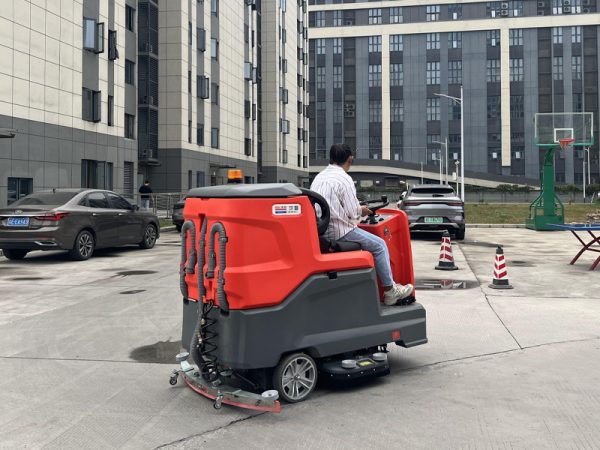
Highly Efficient Cleaning Capacity: The Siben large scrubber's cleaning and suction width reaches 1.5 meters, significantly exceeding the client's 1.2-meter requirement. Its professionally designed brush heads and high-efficiency water recovery system tackle silicon carbide floor stains effectively: high-speed rotating brushes generate powerful friction to thoroughly lift stubborn dirt, while high-power suction motors rapidly recover wastewater and debris. Field tests demonstrated cleaning efficiency exceeding 4,000 square meters per hour—nearly 50% more efficient than previously rented equipment. This dramatically reduced cleaning cycles for both workshop and garage, providing strong support for rapid production startup and garage opening.
Compact Equipment Performance Highlights
Siben's compact cleaning equipment is specifically designed for narrow spaces. With an overall width of just 1.2 meters and an extremely small turning radius, it executes spot U-turns effortlessly in 1.8-meter-wide corridors. Despite its compact size, cleaning performance remains uncompromised: high-speed miniature brushes and appropriately powered suction effectively remove dust, footprints, and corner grime, ensuring every corridor area stays immaculate—bringing significant convenience to daily cleaning operations.
III. Ongoing Cooperation Toward New Cleaning Standards
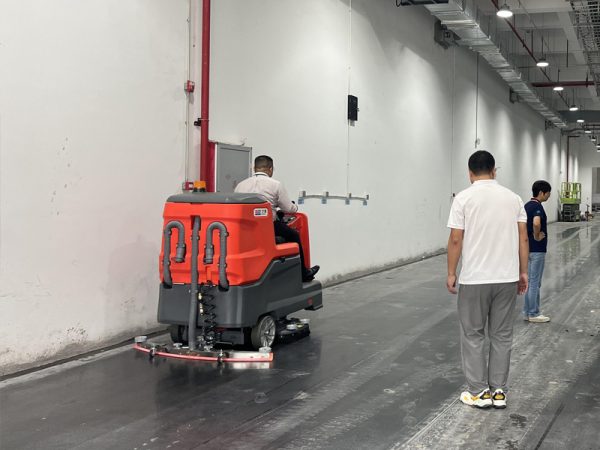
Through this exceptional trial performance, Siben Cleaning Equipment successfully secured the order. Since this initial partnership, Siben's stable and reliable performance has earned continued client recognition. To date, Foshan Guangqi Advanced Equipment has successively purchased multiple Siben units, including both large floor scrubbers and compact cleaning equipment. These machines operate efficiently across different zones, providing solid cleaning assurance for workshop safety, garage operations, and comfortable environments in dormitory and office buildings—demonstrating Siben's powerful capabilities and superior quality in complex-scenario cleaning solutions while this partnership continues reaching new heights.

