Revolutionizing Commercial Cleaning: The Ultimate Guide to Autonomous Floor Scrubbing Robots

Views: 11     Author: SIBEN     Publish Time: 2026-04-20      Origin: Site

Inquire

facebook sharing button
twitter sharing button
line sharing button
wechat sharing button
linkedin sharing button
pinterest sharing button
whatsapp sharing button
sharethis sharing button

In the modern era of facility management, efficiency and consistency are no longer optional—they are essential. As labor costs rise, autonomous floor scrubbing robots have emerged as the gold standard for maintaining pristine environments in malls, hospitals, and industrial warehouses.

Today, we introduce our flagship series: the SIBEN Industrial Cleaning Robot "TN" Series, featuring both high-capacity and compact solutions tailored for every commercial need.

1. SIBEN Large TN 70 PRO: The Powerhouse for Large-Scale Spaces

For expansive areas like airports, logistics centers, and large shopping malls, the Large Benben (120Ah Lithium Battery) is designed to deliver heavy-duty performance without human intervention.

Key Technical Specifications:

  • Cleaning Efficiency: Up to 2010m²/h (Max 2040m²/h).

  • Deep Cleaning Pressure: 27kg downward pressure ensures even the toughest stains are removed.

  • Advanced Navigation: A fusion of Panoramic Mono Camera, LiDAR, Depth Camera, and Ultrasonic sensors for millisecond-level obstacle avoidance.

  • Extended Endurance: 4 hours of scrubbing or 10 hours of dust pushing on a single charge.

Why Choose the Large TN 70 PRO?

  • Multi-Functional Modules: Switch between scrubbing and dust-pushing modes effortlessly.

  • Smart Disinfection: Optional spray modules turn your cleaner into a mobile sanitization unit.

  • Fully Autonomous Docking: With the optional workstation, the robot handles auto-charging, water refilling, and drainage independently.

2. SIBEN Compact TN 10: The Agile Specialist for Narrow Spaces

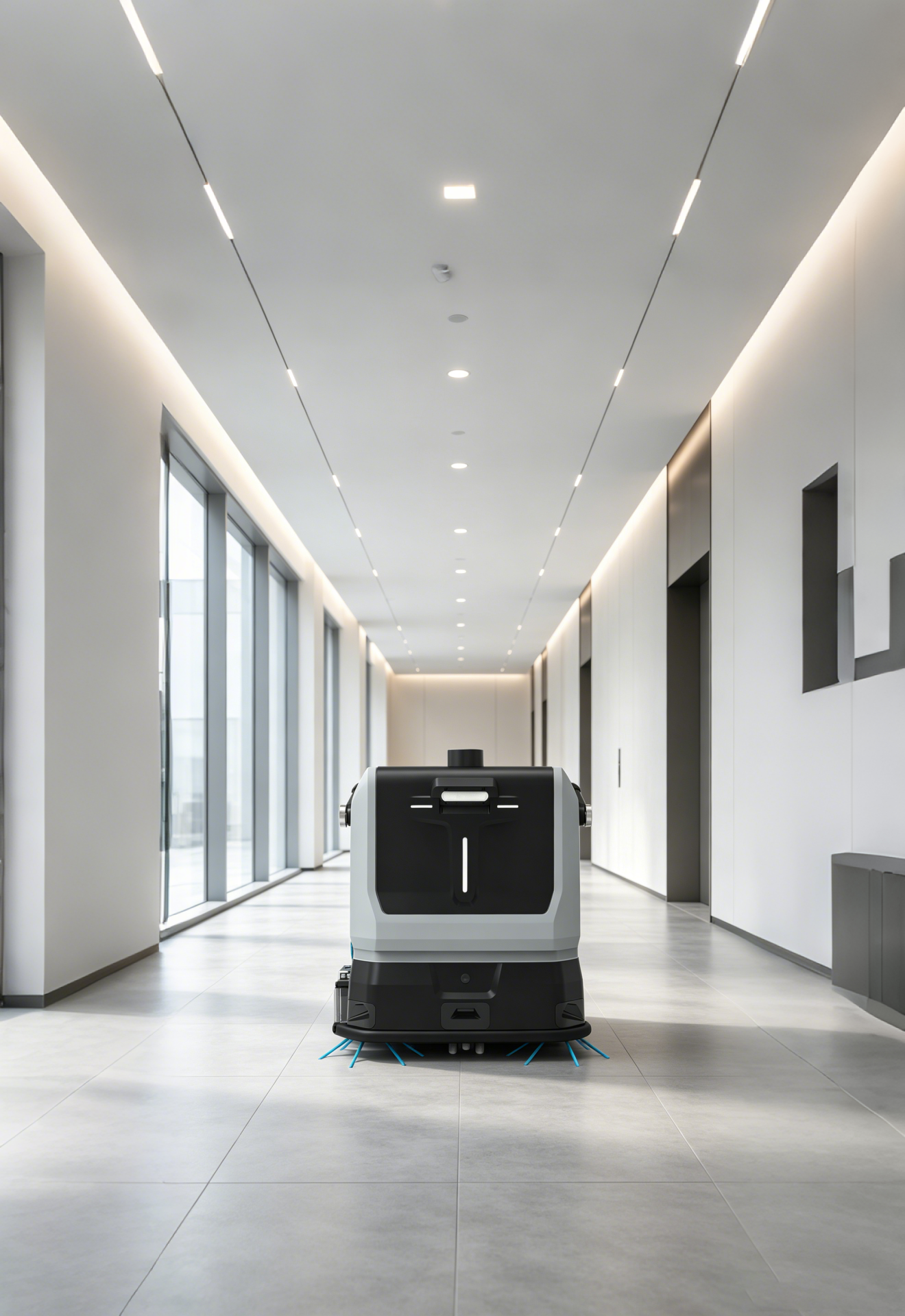
Not every cleaning challenge involves wide-open halls. For retail stores, narrow aisles, and office corridors, the Compact TN 10 offers unmatched maneuverability.

Key Technical Specifications:

  • Ultra-Slim Design: A minimum passage width of only 60cm.

  • 4-in-1 Versatility: Sweeping, scrubbing, vacuuming, and mopping in one single pass.

  • Zero-Distance Cleaning: 0cm edge cleaning ensures no dust is left in corners or against walls.

  • Dual-Roller System: High-pressure dual rollers provide deep decontamination with low consumable costs.
    TN 10 (走廊).png

Why Choose the Compact TN 10?

  • Dry/Wet Separation: An innovative design that separates solid waste from dirty water, making maintenance a breeze and preventing odors.

  • Human-Robot Synergy: Supports both fully autonomous 24/7 scheduling and manual emergency spot cleaning.

  • Smart Cloud Management: Monitor your fleet via a remote cloud platform with real-time data reports and efficiency analysis.

TN 10 (酒店).png

3. Technology That Works for You

Both models are built on the SIBEN Intelligent System, ensuring a "Zero Learning Curve" for operators.

  1. Safety First: Equipped with electronic anti-collision strips and IMU sensors for multi-layered safety.

  2. Digital Management: Every cleaning task is recorded. Facility managers can track progress and statistics digitally, ensuring 100% accountability.

  3. Tool-Free Maintenance: Whether it's the squeegee or the magnetic brush, components can be disassembled in seconds without tools.

Conclusion: Elevate Your Cleaning Standard

Whether you need the robust 199kg Large Industrial Floor Cleaning Robot to tackle a massive warehouse or the agile 26kg Compact Autonomous Floor Scrubber for a boutique environment, SIBEN provides the technology to automate your success.

Ready to automate your facility’s cleaning?

Contact our Sales Team today to receive a customized ROI analysis and find the perfect robot for your floor type.

NEWS
Cutting Energy, Water and Consumable Cost in Industrial Cleaning: 8 Steps
2026 / - 10 / - 16

Facility teams often replace equipment and then find the utility bill unchanged. The usual cause is that power, water, consumables and labour sit in one cost line, so nothing can be verified. This guide sets out eight steps: split the four ledgers, benchmark on equal terms, schedule charging, cut water at the sequence stage, replace consumables by condition, shorten travel paths, keep a monthly log, and keep assumed figures out of acceptance.

Cleaning Schools and Hospitals: 8 Steps That Hold Up in Daily Operation
2026 / - 10 / - 15

Schools and hospitals share one cleaning problem: cleaning and disinfection get merged into one step, and work windows collide with classes and clinics. This guide sets out eight steps, from separating cleaning from disinfection and zoning by risk to colour-coded tools, quiet-hour scheduling, standing-water checks and acceptance criteria.

Underground Garage and Perimeter Cleaning: 8 Steps from Zoning to Handover
2026 / - 10 / - 14

Garage and perimeter cleaning at a property is not a single sweep. It means zoning the surfaces, separating oil films from tyre marks, managing ponding before appearance, keeping dust and leaves off the perimeter, working around traffic, matching the tool to the soil, tracking consumables and water, and verifying the work against a written standard.

Welding, Grinding and Cutting Fume and Dust: 8 Steps to Control at the Workstation
2026 / - 10 / - 13

Welding, grinding and cutting generate fume and dust at the workstation, not across the whole shop. This guide sets out eight steps: survey each station, capture fume close to the arc, size airflow and ductwork, keep filters working, treat metal dust as an explosion risk, clean the settled layer from floors and ledges, run a daily check, and verify equipment at handover with nameplate data.

Warehouse & Workshop Dust Cleaning Compliance Guide: Eight Steps from System to Documentation
2026 / - 10 / - 09

This article outlines the compliance pathway for dust cleaning and management in industrial and trade enterprises, structured across eight key phases: cleaning systems and protocols (assigning responsibilities, target areas, frequency, and record-keeping), frequency and shift scheduling (zoned according to dust generation intensity), blind spots and high-level dust accumulation checklists, cleaning tool configuration (replacing compressed air purging with industrial vacuum cleaners and implementing wet floor scrubbing), secondary dust control and waste transfer, auxiliary inspection of dust removal systems, five categories of record-keeping logs, and compliance self-inspection checklists. Verified parameters of SIBEN's XC-series industrial vacuum cleaners and X-series floor scrubbers are integrated for equipment selection reference.

Oil Mist & Floor Oil Contamination Control in Machining & Stamping Workshops: Nine Steps
2026 / - 10 / - 12

This article focuses on the simultaneous management of oil mist and ground oil contamination in machining and stamping workshops, structured into nine key steps: source identification; source capture and exhaust via hoods, branch ducts, main ducts, and fans; anti-slip ground oil cleaning (dry-first, wet-second); cutting fluid tramp oil separation and reuse; classified temporary storage and transfer ledgers for oily waste liquids; cleaning tool configuration (industrial vacuum cleaners + floor scrubbers + pressure washers); operating time slots and environmental compliance control windows; inclusion of cleaning equipment in project procurement lists and three-stage acceptance. It incorporates verified parameters of SIBEN's XC-series industrial vacuums, X-series floor scrubbers, and C-series pressure washers as selection references.

Lithium Battery Factory Floor Cleaning Solutions: Siben Industrial Sweepers & Scrubbers for Clean, Safe EV Production
2026 / - 09 / - 30

This article explains the unique floor-cleaning challenges of lithium battery production — conductive powder hazards, epoxy coating protection, and moisture/electrolyte control — and shows how a two-stage "sweep then scrub" workflow solves them. It details the Siben A300 (5580㎡/h), A600 (9500㎡/h) and A900 lithium-ion sweeper (16000-22000㎡/h, 5-6 hour runtime) together with X-series scrubbers, and provides selection guidance and an FAQ for facility and EHS managers.

How to Choose Cleaning Equipment for Auto Repair Workshops & 4S Stores: Start with 4 Contaminant Types & 5 Functional Zones
2026 / - 10 / - 06

This article proposes a "classify first, then zone" equipment selection framework for complex cleaning scenarios in auto repair workshops and 4S service centers. It first identifies four contaminant types (oil, dust, paint, mud) and their corresponding cleaning strategies, then provides equipment configuration recommendations for five functional zones — service bays & lifts, body & sanding stations, paint mixing & spray booths, car wash area, and customer reception & showroom. It also covers wet/dry separation principles, electrical & charging safety boundaries, consumables record-keeping, and six quantifiable procurement acceptance criteria, helping readers build a compliant, efficient and practical workshop cleaning system from scratch.