Efficient Industrial Cleaning: Why the SIBEN A500 is the Best Ride-on Sweeper for Leaves and Dust Control in the Philippines

Views: 18     Author: SIBEN     Publish Time: 2026-06-03      Origin: Site

Inquire

facebook sharing button
twitter sharing button
line sharing button
wechat sharing button
linkedin sharing button
pinterest sharing button
whatsapp sharing button
sharethis sharing button

Managing outdoor facilities, factory yards, and residential communities in the Philippines comes with unique environmental challenges. From the heavy accumulation of dried leaves during the dry season to volcanic ash, sand, and persistent dust on gravel or concrete roads, manual sweeping is no longer a viable or cost-effective option.

To maintain pristine public spaces and industrial zones, property managers are turning to heavy-duty automation. Enter the SIBEN A500 Ride-on Industrial Sweeper—a 3-in-1 powerhouse engineered to sweep, vacuum, and suppress dust simultaneously.

6E3A7876.JPG

(Click the image for more details)

In this comprehensive guide, we will explore why the SIBEN A500 is perfectly tailored to the Philippine market's needs, focusing on leaf recycling, sand collection, dust control, and its advanced filter-cleaning technology.

1. Tackling the Philippine Challenge: Leaves, Sand, and Gravel

The tropical climate of the Philippines means properties must constantly deal with a high volume of outdoor debris:

  • Heavy Foliage & Leaves: Large leaves from tropical trees quickly clog standard vacuum sweepers.

  • Sand & Heavy Debris: Coastal winds and active construction bring massive amounts of sand, stones, and gravel onto factory roads.

The SIBEN A500 Solution:

The SIBEN A500 features a massive 1500mm sweeping width (1.5 meters) that outperforms competitors by 10% in sheer coverage. Equipped with a high-torque main roller brush utilizing a rear-throw throwing mechanism, the machine effortlessly flings heavy sand, tree leaves, plastic bags, and cigarette butts directly into its large 180L separate waste container.

2. Advanced 3-in-1 Dust Control System (Zero Dust, Pure Clean)

Sweeping dry dust and sand in a warm climate usually creates a massive secondary dust cloud, affecting pedestrian health and coating factory machinery in grime.

The SIBEN A500 eliminates this with a professional-grade Mist Spraying & Suppression System:

  1. 60L Water Tank: Seamlessly integrated into a durable, rotomolded anti-corrosion body.

  2. Dual Front Mist Nozzles: Delivers a fine water mist directly over the side brushes during operation, capturing airborne dust particles before they can lift.

  3. 600W Suction Fan: Paired with an extra-large 8m² cartridge filter system, ensuring that 99.9% of fine dust is trapped inside the machine, returning completely clean air to the environment.
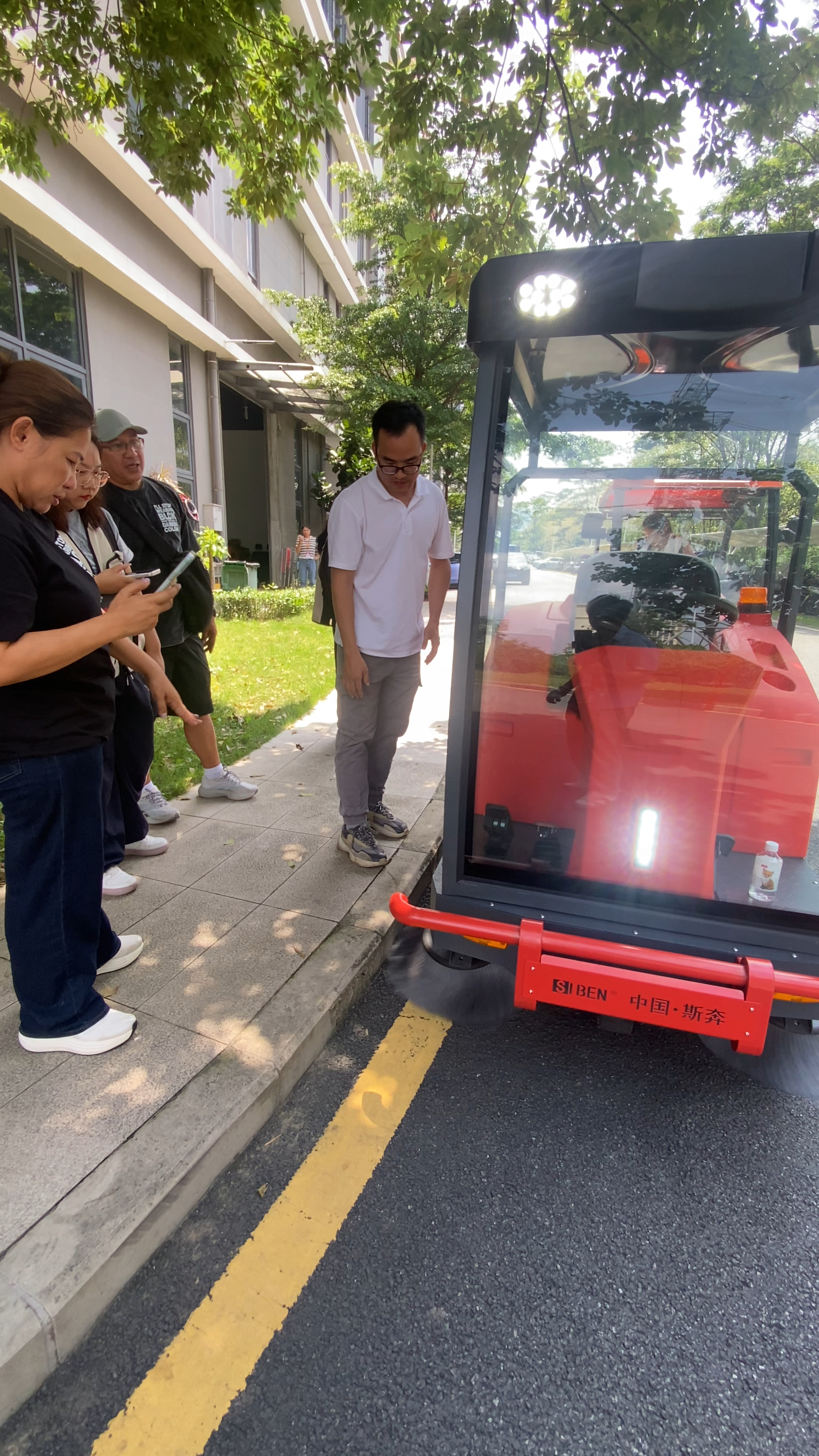
    1(1).jpg

3. The Game-Changer: Electric Filter Shaker for Consistent Suction

One of the biggest pain points of operating an industrial sweeper in dusty environments is filter clogging. When fine sand and dust pack into the filter pores, suction power drops rapidly, forcing the operator to stop, disassemble the machine, and clean the filter manually.

SIBEN eliminates this bottleneck. Before dumping the collected trash, the operator can activate the built-in 80W Electric Filter Shaking Device (电动震尘装置). With the push of a button, high-frequency vibrations automatically shake off all trapped dust from the 8m² filter cartridge into the hopper.

This ensures that your filtration system remains fully optimized for maximum suction every single time you start a new shift, without any dirty manual labor.

4. Technical Breakdown: Engineered for Heavy Industrial Work

Designed for large factories, residential zones, and underground parking lots, the SIBEN A500 offers commercial-grade specifications built to last:

  • Unrivaled Efficiency: Cleans up to 7,500 m²/h, replacing the manual labor of 10-15 cleaners.

  • Powerful Gradeability: Equipped with a 1500W rear-wheel drive brushless motor and dual-chain transmission, allowing it to climb slopes up to ≤35°—perfect for steep underground parking ramps and uneven industrial terrain.

  • Flexible Power Configurations: * Option 1 (Lead-Acid): Affordable upfront cost, ideal for standard daily shifts.

    • Option 2 (Premium Lithium Battery): 48V 100AH Lithium configuration offering an ultra-long 3.5 to 4 hours of continuous runtime, faster charging times, and zero battery maintenance.
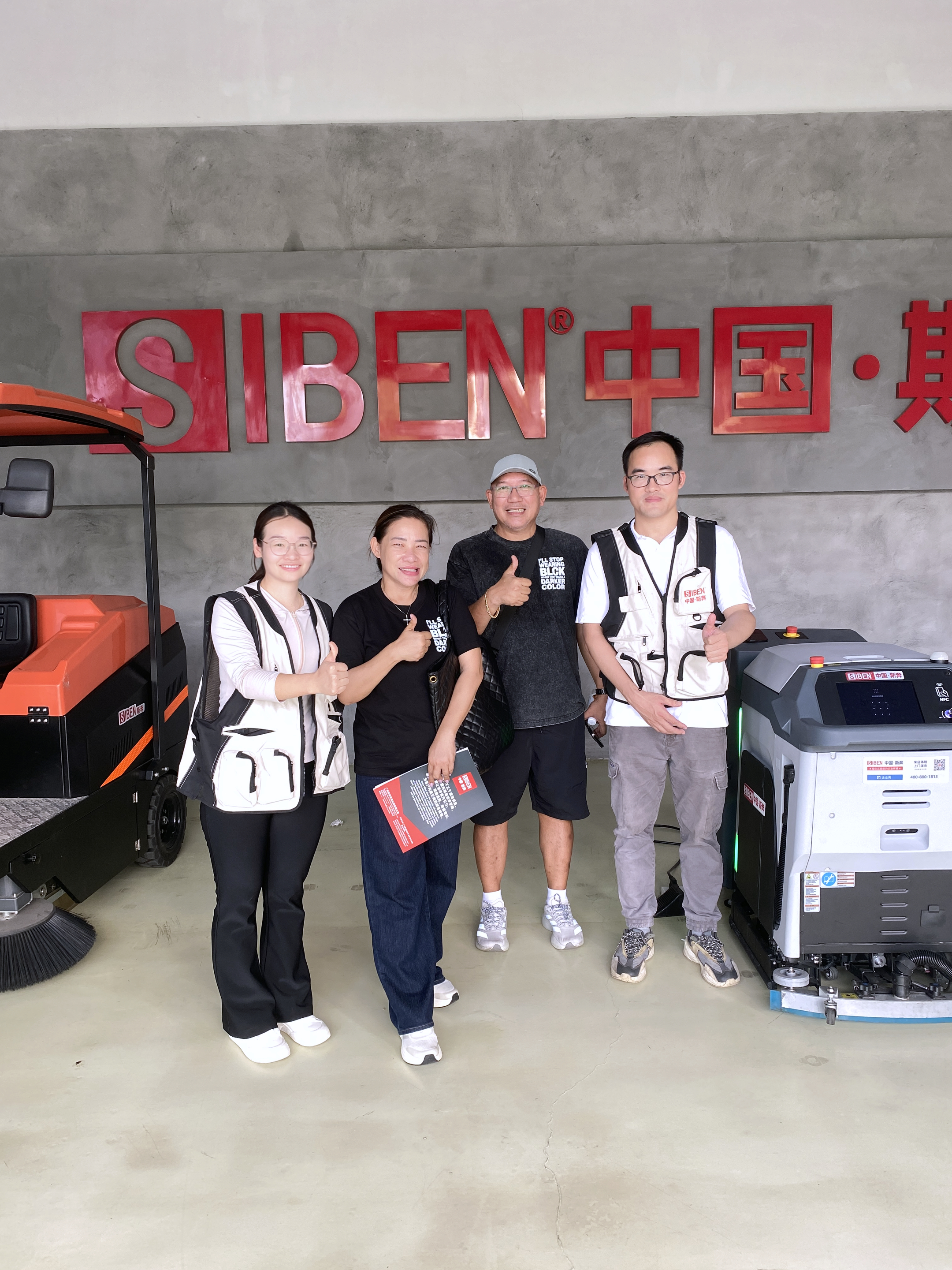
    4(1).jpg

Conclusion: Maximize Your Facility’s Cleaning ROI

Investing in a SIBEN A500 Ride-on Sweeper isn’t just about keeping your property clean; it’s about smart financial management. In the Philippines, where labor tracking and operational efficiency are key to business growth, mechanizing your dust and leaf management can cut your cleaning overhead by up to 70% within the first year.

With its durable steel-structure frame, mist-spray dust suppression, and innovative electric filter shaker, the A500 is built to conquer the harshest outdoor conditions.

Ready to upgrade your property maintenance? Contact Guangzhou SIBEN today for a customized factory direct quote and flexible international shipping options to the Philippines!

Siben: Industrial Cleaning Innovation Since 2019 — Building a Cleaner Future with Smart Technology
2026 / - 09 / - 11

Founded in 2019 and operating out of a 30,000㎡ manufacturing base, Siben is a trusted global provider of industrial cleaning equipment serving over 2,000 enterprises across 20+ countries. This article outlines Siben's corporate history from a small workshop to industry leadership, details its comprehensive five-product-line portfolio (Thunder God AMR robots, X-series scrubbers, A-series sweepers, industrial vacuums, and Red Boy compact cleaners), highlights its three core advantages in engineering, quality verification, and support, and explores how its solutions cater to manufacturing, logistics, retail, healthcare, and public sectors.

Industrial Cleaning Equipment Buying Guide: 12 Pitfalls & Key Questions Answered
2026 / - 09 / - 10

This comprehensive buying guide helps procurement managers and facility directors avoid 12 common pitfalls when purchasing industrial cleaning equipment. It covers equipment type selection (sweeper vs scrubber vs AMR robot), area-to-equipment matching with benchmark tables, realistic ROI modeling (showing 5–7 month payback for AMR robots replacing 3 workers), battery chemistry economics (lithium pays back in 12–18 months for multi-shift operations), hidden cost budgeting (brushes, squeegees, detergents, maintenance), lease-vs-buy decision rules, cleaning quality verification methods, required safety certifications (CE, ISO 3691-4, IP ratings), floor type compatibility charts, after-sales support criteria, AMR facility layout suitability checklist, and a full 5-year TCO comparison showing 42,000netcostforAMRvs218,000 for manual labor. Designed for B2B buyers in warehousing, logistics, manufacturing, and food processing.

Sweeper-Scrubber Combo Machine: How Is It Different from a Floor Scrubber?
2026 / - 09 / - 09

A scrubber-sweeper combo machine integrates sweeping and scrubbing functions into one unit, while a conventional floor scrubber only washes and dries. This article explains the four key differences (workflow, application, efficiency, cost) and gives a practical selection rule based on dust volume and oil contamination level — helping B2B buyers choose between "sweep first, then scrub" and a single-pass combo machine.

What Is a Ride-On Floor Scrubber? Buyer’s Guide
2026 / - 09 / - 08

A ride-on floor scrubber is a ride-operated machine that washes, scrubs and dries large hard floors in a single pass. This guide explains what it is, its key components, cleaning output per hour, who it best suits, and how to size one correctly — with a ride-on vs walk-behind comparison table and a practical FAQ for overseas B2B buyers.

What is a Walk-Behind Floor Scrubber & Who Should Use It
2026 / - 09 / - 07

This article provides a comprehensive overview of walk-behind floor scrubbers—covering their definition, core components (brush, squeegee, dual-tank system), ideal applications, and key selection criteria. It helps procurement professionals quickly determine whether a walk-behind machine suits their facility and compares it with ride-on models for informed decision-making.

How an Industrial Floor Scrubber Works: Brushes, Squeegee, and the Clean/Recovery Water Cycle
2026 / - 09 / - 03

Industrial floor scrubbers clean in one single pass by combining **spraying, scrubbing, and water recovery**. Key selection points: Cleaning Efficiency: Determined by working width and travel speed ($m^2/h$). Brush Type: Must match the floor material (e.g., soft brushes for epoxy, stiff brushes for concrete) to prevent damage. Tank Capacity: Determines runtime per fill (walk-behind: 20–50 L; ride-on: 80–200 L). Recovery Quality: Relies on vacuum power and squeegee blade condition to leave floors instantly dry. Key Maintenance: Inspect or flip squeegee blades every 3–6 months and use only low-foaming detergents.

Industrial Floor Cleaning Robots: Reshaping the Intelligent Cleaning Revolution in Modern Factories and Warehouses
2026 / - 09 / - 02

As smart manufacturing becomes more widespread, industrial floor cleaning robots are rapidly becoming standard equipment for reducing costs and boosting efficiency in modern factories and logistics warehouses. This article comprehensively analyzes the pain points of traditional manual cleaning and details the core advantages of industrial cleaning robots, including autonomous navigation, extended battery life, digital management, and high safety. Furthermore, it offers practical purchasing advice tailored to typical application scenarios like warehouses and logistics centers, heavy industry workshops, and cleanrooms, helping your enterprise usher in a new era of intelligent factory cleaning.

Site-First View of Cleaning Equipment Rental vs Purchase: How Buyers Should Decide
2026 / - 09 / - 01

This comprehensive buyer's guide outlines essential decision-making criteria for procuring commercial and industrial cleaning equipment. It highlights how to prioritize safety and user experience over raw speed, weigh the financial and operational trade-offs between renting and purchasing using Total Cost of Ownership (TCO), and evaluate the suitability of cleaning robots based on facility workflow, route stability, and traffic conditions.