Revolutionizing Commercial Cleaning: The Ultimate Guide to Autonomous Floor Scrubbing Robots

Views: 11     Author: SIBEN     Publish Time: 2026-04-20      Origin: Site

Inquire

facebook sharing button
twitter sharing button
line sharing button
wechat sharing button
linkedin sharing button
pinterest sharing button
whatsapp sharing button
sharethis sharing button

In the modern era of facility management, efficiency and consistency are no longer optional—they are essential. As labor costs rise, autonomous floor scrubbing robots have emerged as the gold standard for maintaining pristine environments in malls, hospitals, and industrial warehouses.

Today, we introduce our flagship series: the SIBEN Industrial Cleaning Robot "TN" Series, featuring both high-capacity and compact solutions tailored for every commercial need.

1. SIBEN Large TN 70 PRO: The Powerhouse for Large-Scale Spaces

For expansive areas like airports, logistics centers, and large shopping malls, the Large Benben (120Ah Lithium Battery) is designed to deliver heavy-duty performance without human intervention.

Key Technical Specifications:

  • Cleaning Efficiency: Up to 2010m²/h (Max 2040m²/h).

  • Deep Cleaning Pressure: 27kg downward pressure ensures even the toughest stains are removed.

  • Advanced Navigation: A fusion of Panoramic Mono Camera, LiDAR, Depth Camera, and Ultrasonic sensors for millisecond-level obstacle avoidance.

  • Extended Endurance: 4 hours of scrubbing or 10 hours of dust pushing on a single charge.

Why Choose the Large TN 70 PRO?

  • Multi-Functional Modules: Switch between scrubbing and dust-pushing modes effortlessly.

  • Smart Disinfection: Optional spray modules turn your cleaner into a mobile sanitization unit.

  • Fully Autonomous Docking: With the optional workstation, the robot handles auto-charging, water refilling, and drainage independently.

2. SIBEN Compact TN 10: The Agile Specialist for Narrow Spaces

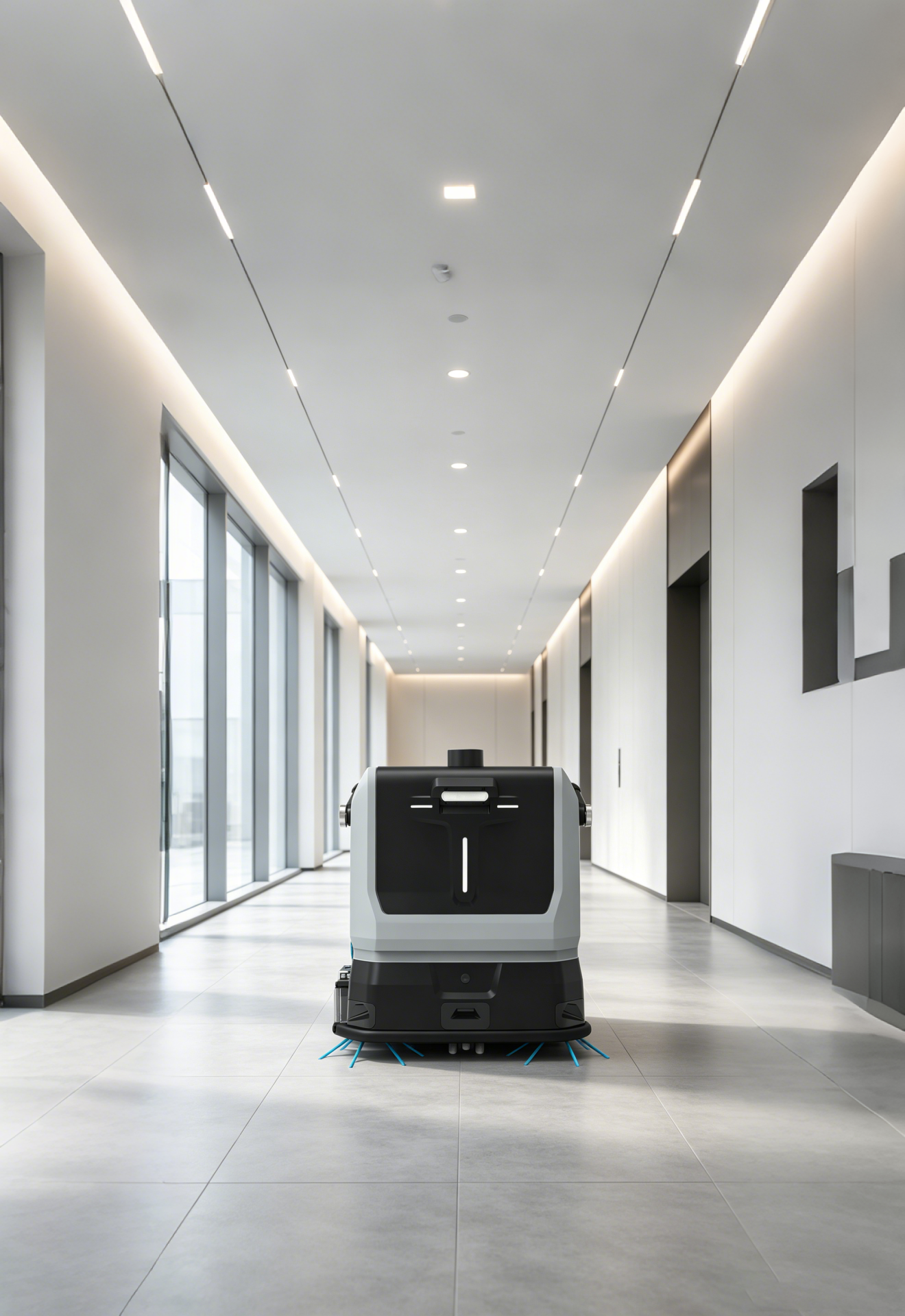
Not every cleaning challenge involves wide-open halls. For retail stores, narrow aisles, and office corridors, the Compact TN 10 offers unmatched maneuverability.

Key Technical Specifications:

  • Ultra-Slim Design: A minimum passage width of only 60cm.

  • 4-in-1 Versatility: Sweeping, scrubbing, vacuuming, and mopping in one single pass.

  • Zero-Distance Cleaning: 0cm edge cleaning ensures no dust is left in corners or against walls.

  • Dual-Roller System: High-pressure dual rollers provide deep decontamination with low consumable costs.
    TN 10 (走廊).png

Why Choose the Compact TN 10?

  • Dry/Wet Separation: An innovative design that separates solid waste from dirty water, making maintenance a breeze and preventing odors.

  • Human-Robot Synergy: Supports both fully autonomous 24/7 scheduling and manual emergency spot cleaning.

  • Smart Cloud Management: Monitor your fleet via a remote cloud platform with real-time data reports and efficiency analysis.

TN 10 (酒店).png

3. Technology That Works for You

Both models are built on the SIBEN Intelligent System, ensuring a "Zero Learning Curve" for operators.

  1. Safety First: Equipped with electronic anti-collision strips and IMU sensors for multi-layered safety.

  2. Digital Management: Every cleaning task is recorded. Facility managers can track progress and statistics digitally, ensuring 100% accountability.

  3. Tool-Free Maintenance: Whether it's the squeegee or the magnetic brush, components can be disassembled in seconds without tools.

Conclusion: Elevate Your Cleaning Standard

Whether you need the robust 199kg Large Industrial Floor Cleaning Robot to tackle a massive warehouse or the agile 26kg Compact Autonomous Floor Scrubber for a boutique environment, SIBEN provides the technology to automate your success.

Ready to automate your facility’s cleaning?

Contact our Sales Team today to receive a customized ROI analysis and find the perfect robot for your floor type.

Siben: Industrial Cleaning Innovation Since 2019 — Building a Cleaner Future with Smart Technology
2026 / - 09 / - 11

Founded in 2019 and operating out of a 30,000㎡ manufacturing base, Siben is a trusted global provider of industrial cleaning equipment serving over 2,000 enterprises across 20+ countries. This article outlines Siben's corporate history from a small workshop to industry leadership, details its comprehensive five-product-line portfolio (Thunder God AMR robots, X-series scrubbers, A-series sweepers, industrial vacuums, and Red Boy compact cleaners), highlights its three core advantages in engineering, quality verification, and support, and explores how its solutions cater to manufacturing, logistics, retail, healthcare, and public sectors.

Industrial Cleaning Equipment Buying Guide: 12 Pitfalls & Key Questions Answered
2026 / - 09 / - 10

This comprehensive buying guide helps procurement managers and facility directors avoid 12 common pitfalls when purchasing industrial cleaning equipment. It covers equipment type selection (sweeper vs scrubber vs AMR robot), area-to-equipment matching with benchmark tables, realistic ROI modeling (showing 5–7 month payback for AMR robots replacing 3 workers), battery chemistry economics (lithium pays back in 12–18 months for multi-shift operations), hidden cost budgeting (brushes, squeegees, detergents, maintenance), lease-vs-buy decision rules, cleaning quality verification methods, required safety certifications (CE, ISO 3691-4, IP ratings), floor type compatibility charts, after-sales support criteria, AMR facility layout suitability checklist, and a full 5-year TCO comparison showing 42,000netcostforAMRvs218,000 for manual labor. Designed for B2B buyers in warehousing, logistics, manufacturing, and food processing.

Sweeper-Scrubber Combo Machine: How Is It Different from a Floor Scrubber?
2026 / - 09 / - 09

A scrubber-sweeper combo machine integrates sweeping and scrubbing functions into one unit, while a conventional floor scrubber only washes and dries. This article explains the four key differences (workflow, application, efficiency, cost) and gives a practical selection rule based on dust volume and oil contamination level — helping B2B buyers choose between "sweep first, then scrub" and a single-pass combo machine.

What Is a Ride-On Floor Scrubber? Buyer’s Guide
2026 / - 09 / - 08

A ride-on floor scrubber is a ride-operated machine that washes, scrubs and dries large hard floors in a single pass. This guide explains what it is, its key components, cleaning output per hour, who it best suits, and how to size one correctly — with a ride-on vs walk-behind comparison table and a practical FAQ for overseas B2B buyers.

What is a Walk-Behind Floor Scrubber & Who Should Use It
2026 / - 09 / - 07

This article provides a comprehensive overview of walk-behind floor scrubbers—covering their definition, core components (brush, squeegee, dual-tank system), ideal applications, and key selection criteria. It helps procurement professionals quickly determine whether a walk-behind machine suits their facility and compares it with ride-on models for informed decision-making.

How an Industrial Floor Scrubber Works: Brushes, Squeegee, and the Clean/Recovery Water Cycle
2026 / - 09 / - 03

Industrial floor scrubbers clean in one single pass by combining **spraying, scrubbing, and water recovery**. Key selection points: Cleaning Efficiency: Determined by working width and travel speed ($m^2/h$). Brush Type: Must match the floor material (e.g., soft brushes for epoxy, stiff brushes for concrete) to prevent damage. Tank Capacity: Determines runtime per fill (walk-behind: 20–50 L; ride-on: 80–200 L). Recovery Quality: Relies on vacuum power and squeegee blade condition to leave floors instantly dry. Key Maintenance: Inspect or flip squeegee blades every 3–6 months and use only low-foaming detergents.

Industrial Floor Cleaning Robots: Reshaping the Intelligent Cleaning Revolution in Modern Factories and Warehouses
2026 / - 09 / - 02

As smart manufacturing becomes more widespread, industrial floor cleaning robots are rapidly becoming standard equipment for reducing costs and boosting efficiency in modern factories and logistics warehouses. This article comprehensively analyzes the pain points of traditional manual cleaning and details the core advantages of industrial cleaning robots, including autonomous navigation, extended battery life, digital management, and high safety. Furthermore, it offers practical purchasing advice tailored to typical application scenarios like warehouses and logistics centers, heavy industry workshops, and cleanrooms, helping your enterprise usher in a new era of intelligent factory cleaning.

Site-First View of Cleaning Equipment Rental vs Purchase: How Buyers Should Decide
2026 / - 09 / - 01

This comprehensive buyer's guide outlines essential decision-making criteria for procuring commercial and industrial cleaning equipment. It highlights how to prioritize safety and user experience over raw speed, weigh the financial and operational trade-offs between renting and purchasing using Total Cost of Ownership (TCO), and evaluate the suitability of cleaning robots based on facility workflow, route stability, and traffic conditions.