-
FAQ Guide on Industrial Floor Cleaning Robots
What is an industrial cleaning robot?
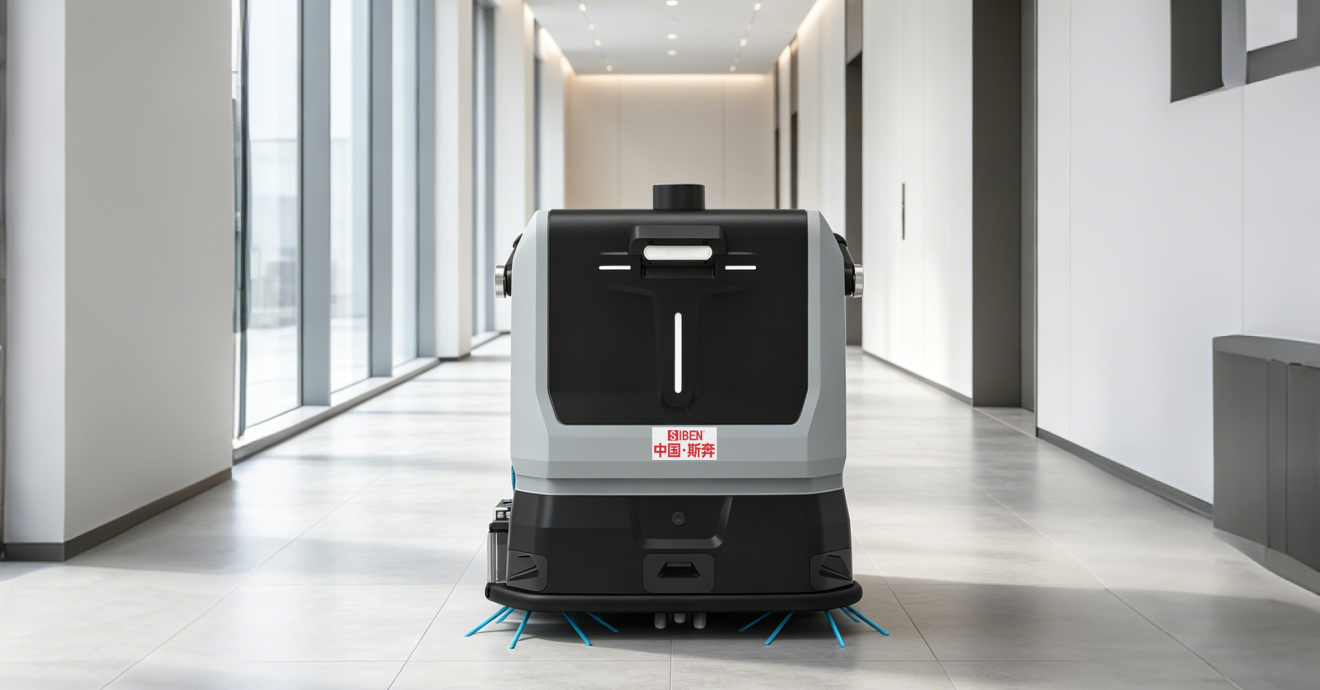
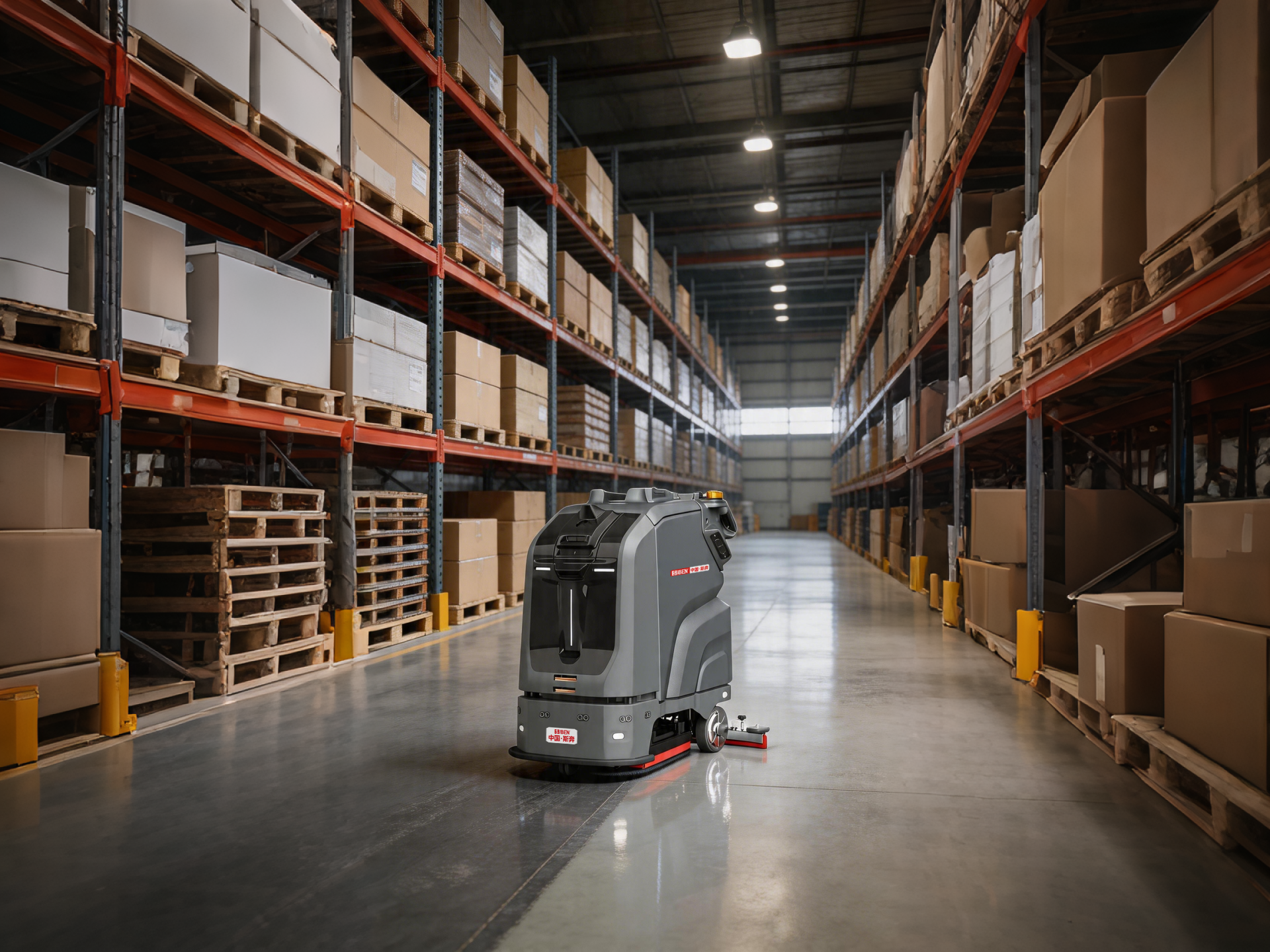
An industrial cleaning robot is an intelligent, automated cleaning device specifically designed for industrial settings such as factories, warehouses, and workshops. It integrates autonomous navigation with floor scrubbing, sweeping, and vacuuming. It can autonomously plan paths, avoid obstacles, and perform scheduled tasks, completing large-area floor cleaning without manual intervention. SIBEN industrial cleaning robots are custom-developed specifically for factory working conditions.
What is the difference between an industrial cleaning robot and a household vacuum robot?
Household vacuum robots are designed for small residential spaces, featuring short battery life (60–90 minutes) and weak suction. Industrial cleaning robots are built for industrial spaces of 1,000 square meters or more, offering a 4–8 hour battery life, laser SLAM + 3D vision navigation, and integrated scrubbing/sweeping/vacuuming functions. Their IP65 protection rating allows them to adapt to harsh environments like dust and oil stains. SIBEN models support 24-hour continuous operation.
What is the working principle of an industrial cleaning robot?
It builds an environment map and performs real-time localization using a laser SLAM + 3D vision navigation system, while AI algorithms plan the optimal cleaning path. During operation, it first sprays water to wash, uses roller brushes for powerful scrubbing, vacuums up sewage and dust using suction power, and finally finishes by wiping dry, achieving an "all-in-one scrub-vacuum-wipe" process. SIBEN features a navigation system with obstacle-avoidance precision of 3cm, allowing it to flexibly weave through equipment gaps.
What are the main types of industrial cleaning robots?
Common types include: smart sweeping robots (focused on dust vacuuming and sweeping), smart scrubbing robots (all-in-one scrub-vacuum-wipe), sweep-and-vacuum robots (sweeping + vacuuming), dust-mopping robots (dust pushing and polishing), and outdoor cleaning robots. SIBEN provides scrubbing-type and sweep-and-vacuum-type industrial cleaning robots.
Which scenarios are industrial cleaning robots suitable for?
Applicable scenarios include: factory production workshops, warehousing and logistics centers, food processing plants, parking lots, commercial complexes, office building lobbies, hospital corridors, and airport/high-speed rail stations. SIBEN cleaning robots are deeply adapted for heavy industrial scenarios such as powder metallurgy, daily chemicals, lithium batteries, and mechanical manufacturing.
How to choose an industrial cleaning robot?
Look primarily at 5 indicators: ① Navigation system (laser SLAM + 3D vision fusion navigation recommended); ② Cleaning efficiency (m²/h); ③ Protection rating (at least IP65 for factories); ④ Battery life (over 4–8 hours); ⑤ After-sales support (whether free on-site installation and maintenance periods are provided). SIBEN offers free on-site surveys and test runs, tailoring solutions based on factory type, pollution characteristics, and workshop layout.
How much do industrial cleaning robots generally cost?
Price range: Scrubbing robots cost 50,000 to 80,000 RMB, while high-end industrial-grade ones cost 80,000 to 150,000+ RMB. Pricing depends on navigation precision, cleaning width, water tank capacity, protection rating, and brand. SIBEN covers everything from entry-level to high-end customized models to match budgets, and provides free on-site test runs.
Should you choose a sweeping robot or a scrubbing robot?
Sweeping robots focus on vacuuming and sweeping, making them suitable for workshops dominated by dust and debris. Scrubbing robots integrate scrubbing, vacuuming, and wiping into one, making them suitable for oily or stained floors. If the factory has oil stains, scrubbing types are recommended; if dominated by dry dust, sweeping types work well. SIBEN offers both types and can recommend based on actual working conditions.
How long does it take to recoup the investment in an industrial cleaning robot?
Taking a 100,000 RMB scrubbing robot as an example, it can replace 3 to 5 cleaning staff. Calculated at a monthly salary of 5,000 RMB per person, it saves 180,000 to 300,000 RMB in labor costs per year, paying for itself in about 4 to 7 months. The comprehensive annual consumable cost is about 12,000 RMB, which is far lower than labor costs. For SIBEN's client at a factory in Jiangmen, the cleaning team was reduced from 5 people to 1 person.
Do industrial cleaning robots require a network? Can they work offline?
The robots store maps locally, so daily cleaning operations do not require internet connection, and they can operate normally offline. Network connectivity is primarily used for remote monitoring, receiving task scheduling, viewing cleaning reports, and OTA upgrades. SIBEN supports 4G/WiFi dual-mode connectivity, allowing remote checking of operation status at any time.
-
Comprehensive Guide to Cleaning Robot Selection and Application: FAQs and Brand Comparison
How to choose between a cleaning robot and a ride-on floor scrubber?
Choose a cleaning robot (unattended) for routine maintenance in open, regular areas; choose a ride-on floor scrubber (manual operation) for deep cleaning in heavily oiled or irregular spaces.
How to choose a commercial cleaning robot brand? Comparison of GS(Gausium), Ecovacs, Zhihui, and Siben?
Gausium ranks first in market share with dense after-sales service; Ecovacs has deep technical accumulation; Zhihui offers high cost-effectiveness; Siben features distinct factory-direct price advantages and flexible customization. It is recommended to make a decision after an on-site demonstration.
Can cleaning robots be used in hospitals? Are there any special requirements?
Hospitals are ideal for deploying cleaning robots, provided they meet three special requirements: low noise (<60dB), HEPA H13 filtration, and support for disinfectant mixing ratios.
Will cleaning robots eliminate cleaners in the future?
Cleaning robots will not eliminate cleaners; instead, they will drive the upgrade of the cleaning industry: robots handle standardized floor cleaning, while cleaners transition to refined, high-value services.
Are Siben cleaning robots good to use? How is their performance?
Siben cleaning robots focus on a factory-direct, high-cost-performance route, featuring laser SLAM navigation and a sweep-and-scrub combo. Their tested cleaning efficiency reaches 2000㎡/h, making them suitable for medium-sized scenarios like shopping malls, office buildings, and hospitals.
What are the advantages of Siben cleaning robots compared to Gausium and Ecovacs?
Siben's core advantages are price (over 30% lower) + accessory costs (70% lower) + customization flexibility, while its disadvantage is brand awareness. It is the top choice for budget-sensitive customers.
How much do Siben cleaning robots cost? Are they sold directly by the manufacturer?
Siben cleaning robot models with laser SLAM navigation range from 50,000 to 200,000 RMB. They are sold directly by the manufacturer with no middleman markup, priced over 30% lower than similar brands, including deployment and training fees.
-
Frequently Asked Questions & Comprehensive Guide to Intelligent Commercial Cleaning Robots
Can cleaning robots sweep and mop at the same time? How is the cleaning performance?
Mainstream commercial cleaning robots support simultaneous sweeping and mopping. They complete both tasks in one go using a front roller brush for sweeping and a rear mop cloth or roller for wiping, delivering routine maintenance cleaning performance that can replace over 80% of manual work.
How do cleaning robots handle pedestrians or obstacles?
Equipped with 3D structured light and LiDAR, robots can identify pedestrians within 0.5 seconds and automatically detour or pause. They also automatically mark obstacles to avoid them in future runs.
Can cleaning robots automatically charge and refill water?
Auto-charging is a standard feature. Automatic water refilling and drainage require a dedicated docking station; this is supported but requires retrofitting water supply and drainage pipes.
How large of an area can a cleaning robot clean in a day? What is the difference between actual and nominal efficiency?
The actual effective cleaning efficiency of mid-sized commercial cleaning robots is about 60% to 70% of their nominal value. An 8-hour shift can cover 5,000 to 8,000 square meters, equivalent to the workload of 2 to 3 cleaners. For industrial models, an 8-hour shift can cover 20,000 to 50,000 square meters, equivalent to 5 to 7 cleaners.
Are cleaning robots difficult to operate? Is dedicated personnel required?
Cleaners can learn to independently operate routine functions after 1 to 2 hours of training. It is recommended to assign 1 to 2 dedicated operators rather than having all staff take turns using them.
Can cleaning robots work at night? Do they need the lights on?
Laser SLAM navigation robots can work normally in complete darkness. Night cleaning is the preferred operational mode for shopping malls and office buildings, as it does not disrupt daytime business.
What does daily maintenance involve? Who performs it?
Daily maintenance is performed by cleaning operators and takes about 10 minutes a day. It consists of three main tasks: emptying/refilling water tanks, inspecting roller brushes and squeegees, and wiping sensors.
Is the failure rate of cleaning robots high? What are the common faults?
Mainstream brands keep their annual failure rate below 5%. The three most common issues are roller brush jams caused by entanglement, sensor blockage false alarms, and network disconnections. 90% of these can be diagnosed and resolved remotely.
How often do consumables need to be replaced? How much do they cost per year?
Roller brushes should be replaced every 3 to 6 months, water squeegees every 2 to 4 months, and filter elements every 3 months. The annual cost of consumables for a single unit is around 500 to 2,000 yuan, which is less than 1/10 of labor costs.
How do commercial cleaning robots compare to manual cleaning in terms of cost? How long does it take to recoup the investment?
Taking a 10,000-square-meter shopping mall as an example, 2 cleaning robots can replace 3 to 4 cleaners, saving 120,000 to 200,000 yuan in annual labor costs and allowing the equipment investment to be paid back within 1 year.
-
Commercial Floor Cleaning Robot Buying and Deployment Guide (FAQ)
Here are 10 core questions and answers regarding commercial cleaning robots for your reference:
Which environments are suitable or unsuitable for commercial cleaning robots?
Most suitable: Large, open hard-floor areas such as shopping malls, office buildings, hospital corridors, airports, and train stations.
Unsuitable: Narrow passages, staircases, and environments with heavy oil stains.
How much does a commercial cleaning robot cost, and what fees are included?
The base unit price is typically between 50,000 and 100,000 RMB.
Fees included: The price covers elevator control integration, deployment fees, and the first year of maintenance/operation services.
What core parameters should be prioritized when selecting a commercial cleaning robot?
The core indicators should be prioritized in the following order: Cleaning Efficiency (m²/h) > Navigation Method (Laser SLAM preferred) > Battery Life > Water Tank Capacity > Obstacle Avoidance Ability.
How should one choose between Laser SLAM and Visual SLAM navigation?
For large shopping malls or factories, Laser SLAM is the preferred choice (accurate positioning, works in the dark).
For small supermarkets or offices, Visual SLAM is an option (lower cost), with a price difference of approximately 50,000 to 100,000 RMB.
Is it better to buy or lease a cleaning robot?
Siben supports free on-site trials. It is recommended to choose based on actual performance after an on-site experience; there is no risk and no mandatory consumption.
Do cleaning robots need to integrate with existing cleaning scheduling systems?
Most brands come standard with a cloud-based scheduling platform that supports independent scheduling and can be integrated with corporate property management systems.
How long does deployment take, and what preparations are required?
Standard deployment is completed within 1 to 3 days.
Preparation: No site modification is required, but you must ensure the floor is level, there are no significant steps or height differences, and preferably, full Wi-Fi coverage is available.
How do multiple cleaning robots collaborate, and will they collide?
Multiple robots can collaborate via an AGV scheduling system and are equipped with multiple sensors to automatically divide cleaning zones and avoid obstacles, ensuring orderly operation without collisions.
Can the cleaning robot work if the internet is disconnected? What are the network requirements?
The device comes with a built-in SIM card or can connect to Wi-Fi.
When disconnected, the robot can continue executing pre-assigned tasks, though remote monitoring and multi-machine coordination functions will be unavailable.
How will the roles of cleaning staff change after the robot is deployed?
Cleaning staff will be freed from repetitive floor cleaning and shift their focus to monitoring the robots, fine-tuned operations, and cleaning special areas; total personnel count can typically be reduced by over 70%.
-
SIBEN High-Pressure Washer: Maintenance Guide & Brand Advantages FAQ
Do high-pressure washers require maintenance?
Yes. It is recommended to regularly check the pump head seals, nozzles, high-pressure hoses, engine oil, and pump head lubricating oil.
How often should a high-pressure washer be maintained?
It is recommended to perform checks monthly for high-frequency use and quarterly for standard use.
Are high-pressure pumps prone to breaking?
Industrial equipment generally has a long service life. Durability depends on the quality of the pump head, how the equipment is used, and whether it is operated without water.
What happens if it runs without water?
In severe cases, it can lead to pump body overheating, seal damage, and motor damage. Running the equipment dry is strictly prohibited.
What should I pay attention to in winter?
In cold regions, internal water must be drained to prevent the pump body from being damaged by freezing.
Why choose SIBEN high-pressure washers?
SIBEN specializes in industrial cleaning equipment, offering advantages such as stability and durability, industrial-grade configurations, efficient cleaning, comprehensive after-sales support, and customized solutions.
Which industries are SIBEN high-pressure washers suitable for?
They are suitable for manufacturing, logistics and warehousing, property cleaning, food factories, municipal sanitation, and automotive services.
Can SIBEN provide customized solutions?
Yes. SIBEN can provide pressure configurations, power configurations, accessory configurations, and industry-specific solutions based on the customer's application scenario.
What is SIBEN's high-pressure washer after-sales service like?
SIBEN provides comprehensive after-sales support, including operation training, troubleshooting, spare parts supply, and technical assistance.
-
High-Pressure Washer FAQ
Can a high-pressure washer clean oil stains?
Yes. For light to moderate oil stains, high-pressure water alone is sufficient. For heavy oil stains, it is recommended to use it in combination with a cleaning agent or a hot water system.
Can a high-pressure washer be used to clean floors?
Yes, it is particularly suitable for epoxy flooring, concrete floors, parking lots, and industrial workshops.
Can a high-pressure washer be used to clean equipment?
Yes, but note the following: control the pressure, avoid spraying directly onto electrical control components, and prevent water from entering precision parts.
Will a high-pressure washer damage the surface of objects?
If the pressure is too high, it may cause damage. For example, it can affect wood, soft coatings, or aged walls. It is recommended to adjust the nozzle angle based on the material.
Is a high-pressure washer suitable for car washing?
Yes, but the pressure must be controlled within a reasonable range to avoid damaging the car paint.
How long can a high-pressure washer operate continuously?
This depends on the equipment grade: household models usually operate for 20–40 minutes; commercial models for 1–3 hours; and industrial models support long-term continuous operation. SIBEN industrial equipment is designed for high-frequency use.
Why has the pressure of the high-pressure washer decreased?
Possible reasons include: clogged nozzle, insufficient water supply, worn seals, or pump head failure.
What should I do if the water output of the high-pressure washer is unstable?
Check the following: air leaks in the water hose, clogged water inlet filter, or abnormal operation of the pump body.
Do high-pressure washers consume a lot of water?
Compared to traditional rinsing methods, they are actually more water-efficient because the high-pressure water flow provides higher cleaning efficiency.
Do high-pressure washers consume a lot of electricity?
The power consumption of industrial equipment is related to its power rating, generally ranging from 2–15KW, depending on the specific model.
-
High Pressure Washer Solutions: Frequently Asked Questions
1. What is a high-pressure washer?
A high-pressure washer is a cleaning device that utilizes high-pressure water jets to remove dirt, widely used in industrial, commercial, and municipal cleaning scenarios. Compared to manual scrubbing, it offers significantly higher cleaning efficiency and lower water consumption.
2. How does a high-pressure washer work?
Its core principle involves using an electric motor or engine to drive a high-pressure pump, which boosts tap water to high pressure. This water is then ejected through a spray gun as a high-speed jet. The powerful impact force effectively strips away surface dirt, oil stains, and can even handle heavy-duty tasks like rust or paint removal.
3. What are the main types of high-pressure washers?
Based on power source and application, they are categorized into: cold water high-pressure washers, hot water high-pressure washers, electric high-pressure washers, gasoline/diesel-powered washers, industrial-grade washers, and portable commercial washers. SIBEN specializes in providing high-durability industrial and commercial high-pressure cleaning solutions.
4. Which scenarios are high-pressure washers suitable for?
They are ideal for various demanding environments, including factory floor cleaning, heavy workshop grease removal, construction machinery maintenance, parking lots, facility management, waste stations, municipal road cleaning, warehouse flooring, food processing plants, and shipyard surface preparation.
5. What is the difference between a high-pressure washer and a regular water gun?
The main difference lies in "pressure" and "cleaning power": A regular water gun has low pressure and is only suitable for rinsing away loose dust. In contrast, a high-pressure washer generates a high-impact water jet capable of effortlessly removing stubborn grease, mud, and long-term grime.
6. How do I choose a high-pressure washer?
When selecting, consider the following: the target cleaning object, daily operating hours, degree of oil contamination, frequency of use, and portability requirements. We recommend focusing on three core parameters: Pressure (Bar), Flow Rate (L/min), and Power (kW).
7. What pressure level is sufficient for a high-pressure washer?
The required pressure varies by application:
100–150 Bar: Suitable for household or light commercial cleaning.
150–250 Bar: Suitable for general commercial use and daily factory cleaning.
Above 250 Bar: Suitable for heavy-duty industrial cleaning and descaling.
SIBEN's industrial models typically feature configurations for medium-to-high intensity cleaning to meet the rigorous standards of industrial environments.
-
SIBEN Industrial Floor Cleaning Robot: Customer FAQ
Thank you for your interest in SIBEN fully automatic cleaning robots. As a pioneer in the field of industrial automated cleaning, we understand that you may face various considerations regarding cost, technology, and implementation results during your enterprise's transition to unmanned cleaning. To help you evaluate the investment value more thoroughly, we have compiled the ten most frequently asked questions by our customers, aiming to provide you with a professional and transparent reference for your decision-making.
1. ROI: Why is the price of the robot higher than manual labor costs?
Answer: The robot is not just a cleaning tool; it is a productivity upgrade for your factory.
High-End Configuration for Safety: The price reflects our superior hardware investment. We have equipped the robot with a multi-sensor fusion system (including dual LiDAR, 6 sets of ultrasonic radars, and 3 sets of visual sensors) to ensure precise obstacle avoidance and personnel safety in complex environments.
Calculating Long-Term Comprehensive Costs: You should look beyond the purchase price and calculate the "Total Cost of Ownership." Manual labor costs include wages, social insurance, room and board, etc., totaling over 5,000 RMB per month on average. A single robot can cover the workload of 3–5 people, typically allowing for a return on investment within about one year. The subsequent years represent pure profit.
Management Value: The robot works 24/7 without rest, requires no overtime pay, remains unaffected by emotions, and executes instructions precisely, eliminating the hidden costs of recruitment, training, and personnel management.
2. Stability in Complex Environments: Will it get lost or collide if goods are moved frequently?
Answer: No. We use a dual laser navigation system (2D+3D):
Safety Priority: The core factory setting is "Safety First," strictly prohibiting any collisions.
Dynamic Environmental Adaptation: The 2D LiDAR is responsible for forward obstacle avoidance, while the 3D LiDAR handles overhead scanning. Even if goods in the workshop are moved, the robot can maintain precise positioning as long as the ceiling structure remains unchanged, preventing it from getting lost or colliding.
3. Safety Protection: Can it stop in time if it encounters a forklift, cardboard box, or staff?
Answer: Yes, it reacts extremely fast. We have served many hospitals and schools, where we maintain high safety standards for "unexpected human intrusion." Through multi-sensor (laser + ultrasonic + visual) real-time environmental modeling, the robot can trigger active avoidance or emergency braking the moment it detects a forklift, box, or pedestrian, ensuring absolute safety.
4. Unmanned Operation: Can it achieve 24/7 unattended work?
Answer: Absolutely. The equipment features automatic recharging, automatic water refilling, and automatic sewage discharge. With a single charge lasting up to 10 hours and the automated station for refills, it can achieve continuous 24-hour operation. Management can send tasks and monitor progress remotely via mobile phone or computer.
5. Cleaning Effectiveness: What is the coverage rate? Will it miss spots?
Answer: The cleaning coverage rate can reach 100%. Based on over a decade of experience in traditional industrial cleaning equipment, we considered various scenarios and customer pain points during the robot's R&D phase. Our full-coverage algorithm ensures that sweeping and mopping are efficient without overlaps or dead angles, guaranteeing consistent hygiene standards.
6. Ease of Use: Is map construction complex? Does it require frequent debugging for area changes?
Answer: It is very easy to use. Map learning takes only one day. We have pre-configured flexible task modes and support combined tasks. If you need to change cleaning areas later, you simply update the instructions in the background—no re-mapping is required, making operation highly intelligent.
7. Station Functionality: Are the automatic refilling, drainage, and charging functions stable?
Answer: Highly stable. This docking station system is a mature solution delivered after 3 years of R&D and extensive on-site testing. It is currently running stably in numerous large factories, completely resolving the risks associated with automatic water/sewage management.
8. Maintenance: Will there be hidden annual fees or software upgrade costs?
Answer: We provide lifetime OTA online upgrades and include this clause in our contract. We aim for a long-term value partnership, not a one-time transaction.
9. After-Sales Support: Is remote troubleshooting fast? Is on-site support reliable?
Answer: Efficient and standardized. 85% of general usage issues can be resolved instantly via remote assistance. Before we depart after delivery, we conduct strict professional training for your on-site operators and provide certificates of completion. As long as operators follow the guidelines, equipment issues are minimal.
10. Payback Period: How long does it take to recover the costs?
Answer: The payback period depends on the cleaning area and your current manual labor costs. Based on standard working conditions, you can typically reach a break-even point in about 12 months. After that, every day the robot runs, it generates pure profit for the company, making it a highly cost-effective long-term investment.
Upgrading your cleaning solution is not just a technological shift; it is a leap in operational efficiency. SIBEN is committed to partnering with our customers through a "lifetime service" philosophy. Please feel free to contact our technical team. We look forward to becoming your most reliable partner on the path to unmanned factory management.

