Factory Floor Cleaning Guide: Scrubbers, Sweepers, and Industrial Vacuums

Author: SIBEN     Publish Time: 2026-08-10      Origin: Site

Inquire

Factory Floor Cleaning Guide: Scrubbers, Sweepers, and Industrial Vacuums presents industrial cleaning equipment through floor area, soil level, aisle width, cleaning frequency, labor availability, safety, and maintenance requirements.

Scenario-Based Equipment Selection

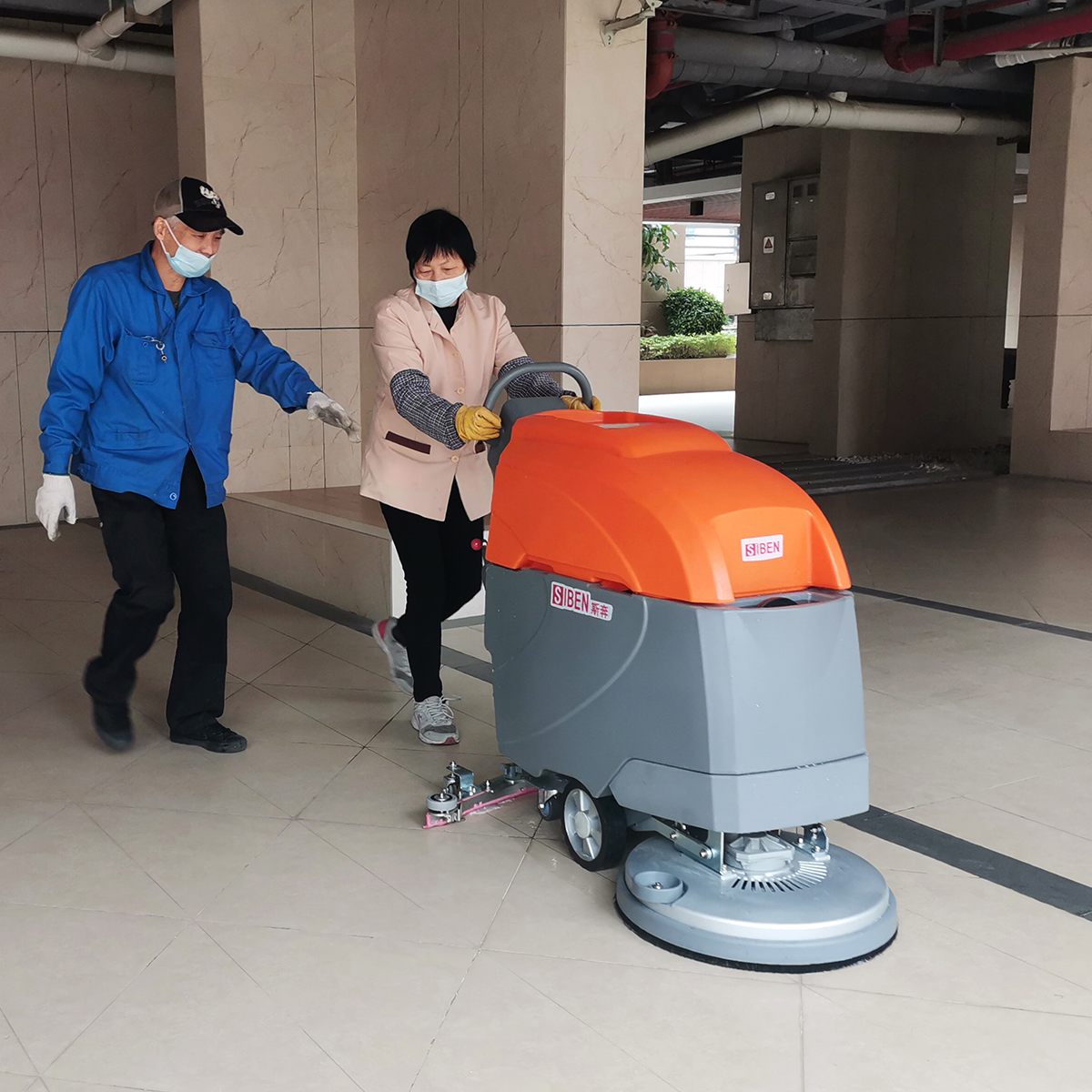
For compact indoor areas, walk-behind floor scrubbers are suitable because they are flexible, easy to operate, and simple to maintain. They are useful for offices, schools, hospitals, stores, restaurants, small workshops, and localized garage cleaning.

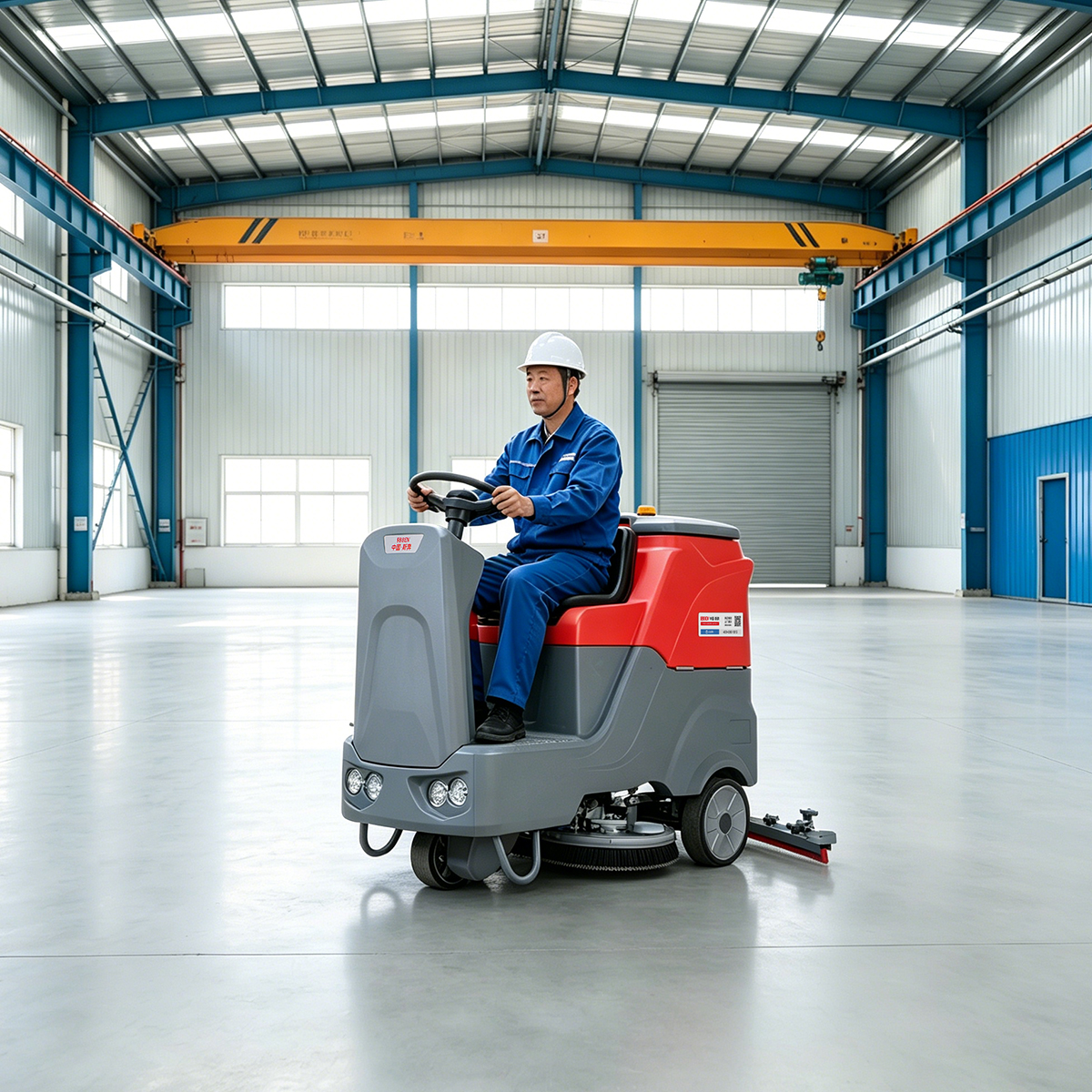
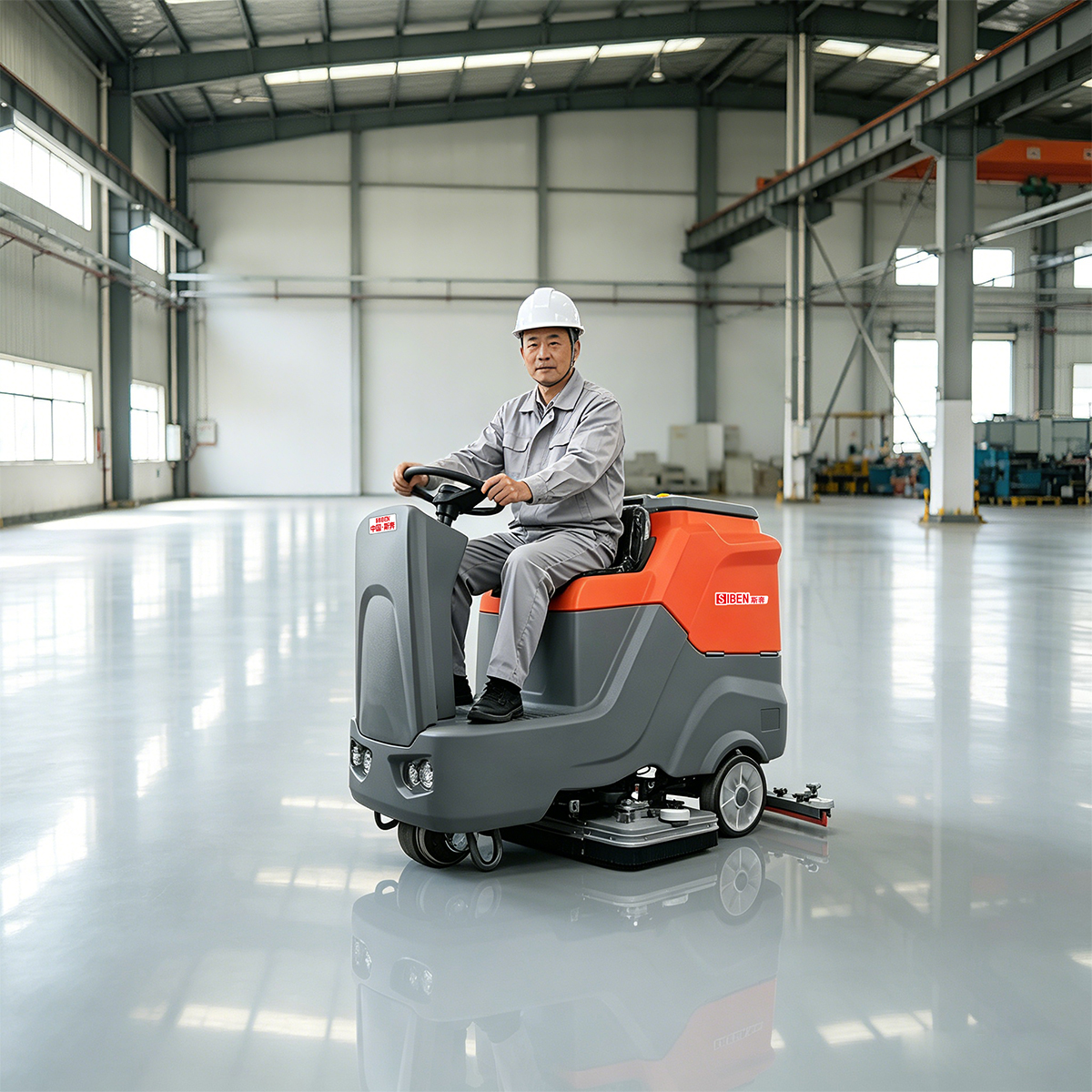
For large factories, warehouses, underground garages, shopping malls, and property cleaning projects, ride-on floor scrubbers are more suitable. They improve productivity, reduce operator fatigue, and support longer continuous cleaning tasks.

For repeatable routes and digital cleaning management, industrial floor cleaning robots are a stronger option. They are useful when routes are stable, cleaning frequency is high, and the buyer wants to reduce repetitive manual labor.

For outdoor roads, industrial parks, dust, leaves, sand, and debris, sweepers handle the first pass. For dust, metal chips, welding slag, particles, and liquid recovery, industrial vacuum cleaners support scrubbers and sweepers.

How SIBEN Products Fit the Scenario

SIBEN provides walk-behind floor scrubbers for compact functional areas, ride-on floor scrubbers for larger continuous cleaning routes, industrial cleaning robots for repeatable autonomous tasks, sweepers for dust and debris control, and industrial vacuum cleaners for workshop particles, dust, and liquid recovery.

SIBEN X-series walk-behind floor scrubbers fit daily indoor maintenance where flexibility, simple operation, and easy maintenance matter. Key specifications include runtime, cleaning efficiency, solution tank capacity, recovery tank capacity, cleaning width, squeegee width, noise level, and suitable floor types.

2

X1

3

X2

2

X3

4

X5

4X7

2

X8

(Click the image for more details)


SIBEN ride-on floor scrubbers, including Erlangshen models, fit larger facilities that require continuous operation. Longer runtime, larger tanks, wider cleaning paths, and stronger water recovery improve cleaning efficiency in warehouses, factories, garages, and malls.

For intelligent cleaning projects, SIBEN Thunder God GT and WInd God cleaning robots support repeatable large-area workflows. Leishen GT covers SLAM, 3D vision, autonomous route planning, obstacle avoidance, automatic charging, water refill and drainage, elevator/access integration, remote diagnostics, task scheduling, OTA upgrades, and cleaning report generation. Fengshen strengthens the SIBEN cleaning robot portfolio for facility buyers that need automated cleaning management.

Buyer Decision Criteria

The key comparison points are cleaning productivity, runtime, tank capacity, cleaning width, turning radius, passing width, noise level, maintenance access, spare parts supply, and service response. The best equipment is not always the lowest-priced machine; it is the machine that fits the facility and keeps working reliably over time.

For high-frequency cleaning, runtime and maintenance efficiency matter. For public facilities, noise and safety matter. For large stable routes, autonomous cleaning and workstation support create more value.

Conclusion

SIBEN industrial cleaning equipment connects application environment, measurable specifications, product combinations, and service support. Buyers can compare machines by real site conditions, operating budget, maintenance needs, and long-term reliability.


NEWS
Norovirus Season: Three Gates Your School and Hospital Machines Must Pass
2026 / - 11 / - 13

From October to March, schools and hospitals face their hardest cleaning season. This article separates three jobs — cleaning, disinfection and spill response — sets a firm rule that vacuum cleaners and scrubbers never touch vomit, and defines three gates: chlorine compatibility, low-noise operation in wards and dormitories, and slip control in corridors. It closes with a procurement checklist that turns rated values into testable acceptance items.

Mall Cleaning Starts at Midnight: Two Windows, One Handover
2026 / - 11 / - 12

Shopping centres are judged in the minutes before opening, not during the night shift. This article splits cleaning into a three-hour night block that clears the route, washes and dries floors, then handles details and the waste room, and a ninety-minute handover testing five things: dry, bright, clean, odour-free and unobstructed. It adds machine choice by aisle width, noise limits by time slot, three record sheets and four contract clauses.

Dust Is Not a Sweeping Problem: Fix Capture Points Before You Buy
2026 / - 11 / - 11

Workshop dust is usually re-suspended, not removed. This guide covers the three capture points, why hood distance beats motor power, how airflow differs from vacuum, why ducts clog, and five questions to answer before buying an industrial vacuum. It closes with a log that turns dust observations into a retrofit list.

Warehouse Dust Control: Zone First, Then Choose Equipment
2026 / - 11 / - 10

For warehouse operators, the practical question is simple: which zones allow ordinary cleaning equipment, and which require certified explosion-proof machines? This guide explains how to classify your facility, verify certificates and markings, manage accumulated dust at three height levels, and specify industrial vacuums by filtration, capacity and power type.

Heavy Oil on the Factory Floor: Five Prerequisites to Check Before Blaming Your Scrubber Dryer
2026 / - 11 / - 09

When a scrubber dryer stops working on oily factory floors, the machine is rarely at fault. Most failures trace to five process prerequisites: pre-collect the sludge layer before scrubbing; dose the alkaline detergent correctly and give it dwell time; match brush type and down-pressure to the floor; keep squeegees fresh and foam under control; and set the schedule by how long the oil sits. Judge results with a paper test, a raking light and dry time.

Before You Sign: A Receiving Inspection and Commissioning Checklist for Industrial Cleaning Equipment
2026 / - 11 / - 06

An industrial cleaning machine costs the most on delivery day: defects found before signing stay with the vendor, after signing they become warranty tickets. This checklist covers the receiving window — match contract, packing list and certificates; check damage and parts; verify nameplate data against the contract; run empty, then loaded trials on your floor; confirm training and spares handover; sign an itemized acceptance sheet; log warranty and claim dates; add certificate checks in dusty areas; watch the run-in week.

How to Choose Cleaning Equipment for Hospitals & Schools: Robots Handle Fixed Routes, Humans Handle Judgment
2026 / - 11 / - 05

Facilities putting cleaning robots into hospitals and schools often fall into two extremes — "buy it and we can fire the cleaners" or "mixed human-robot environments are too risky, robots are useless." Both are wrong. The right approach is: robots run stable, repetitive, pre-authorised routes; humans handle anything that needs judgment. This article lays out a four-part framework you can execute directly.

The Gauge Is Not the Ground: Five Links That Steal High-Pressure Cleaning Force
2026 / - 11 / - 04

Pressure at the pump outlet is not pressure at the surface. Force is lost across five links: the pump curve, hose length, fitting bore, nozzle orifice and operator standoff. This guide shows how to test each link in minutes, why a nozzle is a consumable rather than an accessory, and how to record a test-patch baseline so acceptance is repeatable instead of subjective.