SIBEN Industrial Sweeper FAQ Guide

Views: 9     Author: SIBEN     Publish Time: 2026-07-02      Origin: Site

Inquire

facebook sharing button
twitter sharing button
line sharing button
wechat sharing button
linkedin sharing button
pinterest sharing button
whatsapp sharing button
sharethis sharing button

I. Cleaning Performance and Efficiency

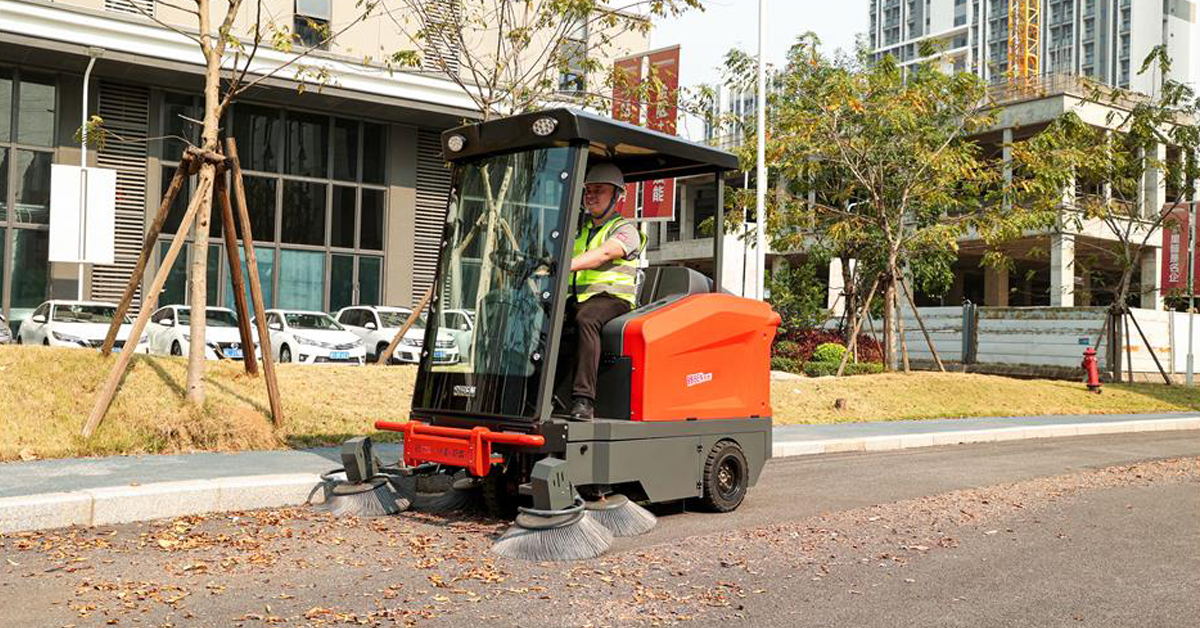
  • Q: How much area can it sweep in one hour? Can it replace 3–5 cleaning workers?

    • A: The walk-behind model can clean over 2,000 square meters per hour, while the ride-on model can clean over 16,000 square meters per hour. As the cleaning area increases, the labor savings significantly exceed 3–5 workers. Automated cleaning reduces management burdens and allows your employees to focus on more meaningful and value-added tasks.

  • Q: Can gravel, iron filings, and dust be swept clean in one pass? Will it cause secondary dust emissions?

    • A: Yes, it can clear them in one pass—even bricks can be swept up. The equipment features a professional atomized dust suppression system to ensure no secondary dust is generated.

  • Q: Are the clean water tank and waste hopper capacities large? Do I need to empty the trash frequently?

    • A: Both the water tank and the waste hopper have large capacities, typically requiring you to empty the trash only after cleaning about 20,000 square meters.
      6E3A7952.JPG

II. Battery and Maneuverability

  • Q: How long can the battery last on a full charge? Will I need to charge it halfway through the shift?

    • A: On a full charge, it can run continuously for 3–8 hours. We configure different battery options based on your specific requirements to resolve any range anxiety.

  • Q: Can it easily cross factory thresholds and small ramps? Will it get stuck?

    • A: We have specialized cleaning equipment for climbing. It can easily handle slopes of up to 40 degrees in underground garages, and thresholds of 3 cm are not a problem at all.

6E3A7804.JPG

III. Durability and Maintenance

  • Q: Is the machine body sturdy? Is it prone to damage from frequent collisions in the factory?

    • A: Our machines are "industrial-grade" and built to be rugged. They are equipped with an electronic parking brake; the machine stops immediately when the throttle is released to ensure safety. We prioritize robust industrial equipment; in one instance, a client's interns played "drifting" and hit a wall, damaging the wall, but the machine remained perfectly fine.

  • Q: What is the warranty period, and is the maintenance cost high?

    • A: The A-series comes with a 1-year warranty, and the S-series has a 2-year warranty. Consumables like brushes and filters cost only a few dozen yuan, offering a competitive advantage. Annual maintenance costs are around 500 yuan—barely over 1 yuan per day—which is cheaper than the cost of replacing traditional manual brooms.

IV. Value Comparison and Long-Term Investment

  • Q: Others with the same configuration are thousands cheaper; where does your higher price come from?

    • A: In the current market, no one wants to drive customers away. The price difference comes down to three factors:

      1. Materials: We use imported materials and sufficient, high-quality components. If we used cheaper or thinner materials, the effect might be the same initially, but the equipment lifespan would be much shorter. We want to build long-term relationships and earn a reputation that brings us referrals, rather than being "one-and-done." While others are thousands cheaper, our machines last about 8 years, while cheaper ones might last 3. Is it really cheaper in the end?

      2. Service & Support: We provide superior service, better configurations, and more effective cleaning results.

      3. Overall Quality: Our focus is on long-term value, not just short-term price competition.

Industrial Cleaning Robot Deployment Guide: Route Stability and Equipment Selection
2026 / - 08 / - 24

This guide provides a comprehensive framework for buyers evaluating industrial cleaning robots and equipment. It outlines essential site assessment criteria—such as route stability, obstacle handling, and infrastructure readiness—and details how to match SIBEN cleaning solutions (including Leishen GT and Fengshen) to specific facility workflows for optimal return on investment.

Industrial Cleaning Equipment: Rental vs. Purchase? A Complete Buyer's Decision Guide
2026 / - 08 / - 19

This article provides a scenario-specific decision-making guide for facility teams comparing the rental versus purchase of industrial cleaning equipment. The author emphasizes that decisions should not be based solely on monthly rent or purchase prices, but rather on the Total Cost of Ownership (TCO), including labor savings, maintenance responsibilities, downtime risks, and usage frequency. By evaluating actual operational workflows—such as cleaning areas, soil types, and working windows—businesses can select the optimal equipment strategy to maximize efficiency and control long-term costs.

How to Choose Low-Noise Industrial Cleaning Equipment for Malls, Hospitals, and Schools Based on Cleaning Conditions
2026 / - 08 / - 21

Addressing the noise-sensitive environments of shopping malls, hospitals, and schools, this article analyzes their unique working conditions, including customer traffic flows, 24/7 noise sensitivity, and class schedules. By comparing cleaning pain points across these venues, it offers targeted recommendations for low-noise industrial cleaning equipment: malls prioritize efficiency and Eco-silent modes; hospitals demand ultra-silent performance (56-60 dB) and antibacterial features; and schools balance indoor quietness with multi-surface adaptability. A core comparison table is included to guide facility managers and procurement teams in making informed, high-efficiency decisions.

Industrial Vacuum Selection and Cleaning Equipment Guide
2026 / - 08 / - 20

This guide outlines key considerations for selecting industrial vacuums and floor scrubbers based on dust types, particle sizes, and debris. It highlights the importance of using industrial vacuums as a pre-cleaning tool before wet scrubbing, introduces SIBEN’s automated and standard equipment matching solutions, and provides practical decision criteria to optimize long-term facility cleaning costs.

Guide to Industrial Cleaning Equipment Procurement and Manufacturer Evaluation
2026 / - 08 / - 18

This article explores key factors in industrial cleaning equipment procurement, highlighting that a manufacturer's service capabilities—such as after-sales maintenance, parts supply, and training—are just as critical as machine performance. It guides buyers on scientifically pairing scrubbers, sweepers, and cleaning robots based on workflow, floor materials, and traffic flow, while evaluating total cost, delivery, and support for long-term operational success.

Cleaning Equipment Selection for Electronics Manufacturing Areas
2026 / - 08 / - 17

This article explores the core logic and equipment selection methods for industrial floor cleaning. It points out that factory floor cleaning cannot be evaluated based on area alone; instead, different types of dirt—such as oil stains, dust, metal shavings, and tire marks—must be categorized and treated accordingly, alongside the implementation of a scientific workflow consisting of "sweeping/dust extraction first, followed by scrubbing." Meanwhile, combined with SIBEN's product line (such as walk-behind/ride-on floor scrubbers, industrial cleaning robots, sweepers, and industrial vacuum cleaners), the article provides buyers with decision-making criteria based on facility layout, aisle width, operating time, and long-term costs. It emphasizes the integration of machine combinations, practical operational workflows, and long-term after-sales support to achieve efficient cost reduction.

What Industrial Cleaning Scenarios Are High-Pressure Cleaners Suitable For? Surface, Floor, and Outdoor Stain Treatment
2026 / - 08 / - 14

This article briefly introduces the applications of high-pressure cleaners in the industrial sector, focusing on three core scenarios: Equipment Surface Cleaning: Efficiently removes oil stains and rust for precise maintenance. Floor Deep Cleaning: Quickly breaks up stubborn oil films to eliminate slip hazards. Outdoor Environmental Treatment: Easily handles large-scale stubborn stains and pipeline dredging, helping enterprises reduce costs, increase efficiency, and ensure safe production.

Airport & High-Speed Rail Station Cleaning Equipment Allocation Guide
2026 / - 08 / - 13

This article provides a comprehensive guide on scientific cleaning equipment configuration and zoning management for ultra-high-traffic transit hubs such as airports and high-speed rail stations. It highlights core challenges like complex flooring, non-stop passenger flow, and strict slip-resistance requirements, while offering tailored scrubber, sweeper, and vacuum selection strategies across various functional zones including indoor halls, passenger corridors, outdoor plazas, and parking lots. Additionally, it outlines key evaluation criteria such as noise control, water absorption, battery endurance, and unified procurement to help property managers achieve efficient, cost-effective floor care operations.