The Ultimate Guide to SIBEN Industrial Floor Scrubbers: FAQ & Buying Advice

Views: 9     Author: SIBEN     Publish Time: 2026-06-29      Origin: Site

Inquire

facebook sharing button
twitter sharing button
line sharing button
wechat sharing button
linkedin sharing button
pinterest sharing button
whatsapp sharing button
sharethis sharing button

1. Part 1: Industry Solutions

  • Q1: What type of scrubber is best for factory workshops?

    • A: Ride-on floor scrubbers are recommended for high efficiency and long runtime, capable of cleaning over 4,000 sqm per hour.

  • Q2: What is the most effective way to clean underground parking lots?

    • A: Use ride-on scrubbers with vacuum functions to ensure floors are cleaned and dried simultaneously.

  • Q3: What cleaning equipment meets hygiene standards for food processing plants?

    • A: Industrial-grade scrubbers are essential to ensure the floor is washed and dried immediately, preventing bacterial growth.
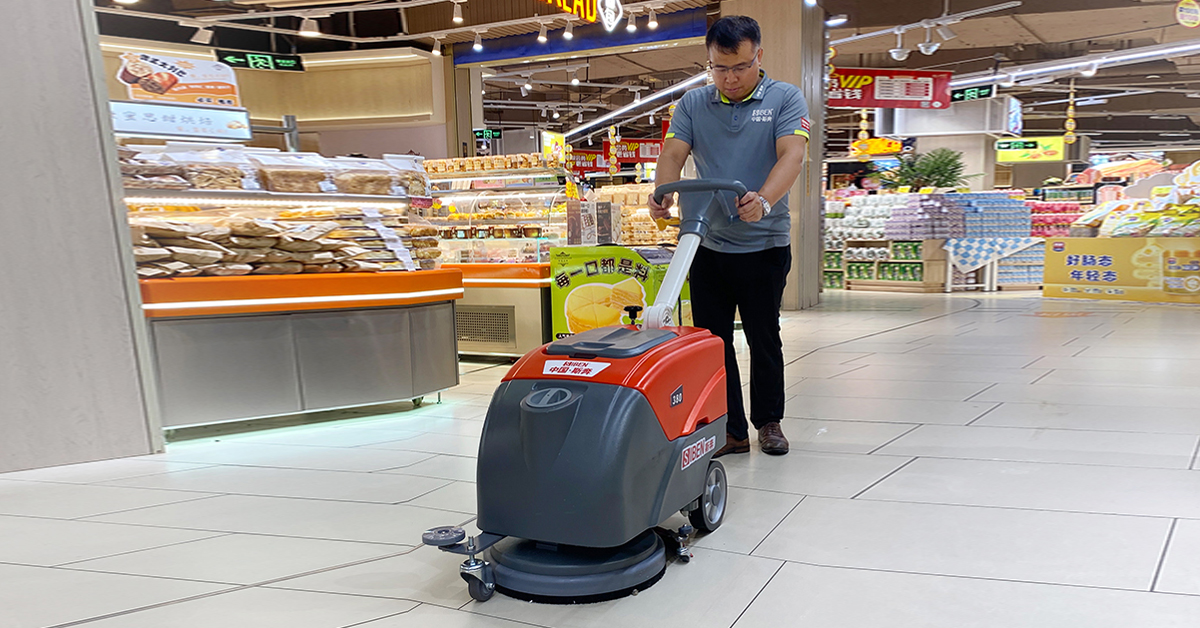
      Walk-Behind Floor Scrubber X1 (2).jpg

      (Click the image for more details)

2. Part 2: Procurement & Maintenance

  • Q1: How much does an industrial floor scrubber cost?

    • A: Prices range from thousands to 150,000 RMB, depending on the configuration and cleaning width.

  • Q2: What is the lifespan of the battery, and when should it be replaced?

    • A: SIBEN uses lithium iron phosphate batteries with a 3-year warranty and a lifespan of about 6 years. Regular charging extends battery life.

  • Q3: What is your after-sales and warranty policy?

    • A: SIBEN provides a 1-year whole-machine warranty, with a 5-minute response time and 30-minute solution proposal. On-site service is available within 24-48 hours.

  • Q4: How to choose between walk-behind and ride-on scrubbers?

    • A: Walk-behind is ideal for areas under 5,000 sqm, while ride-on models are better for large factories and warehouses.
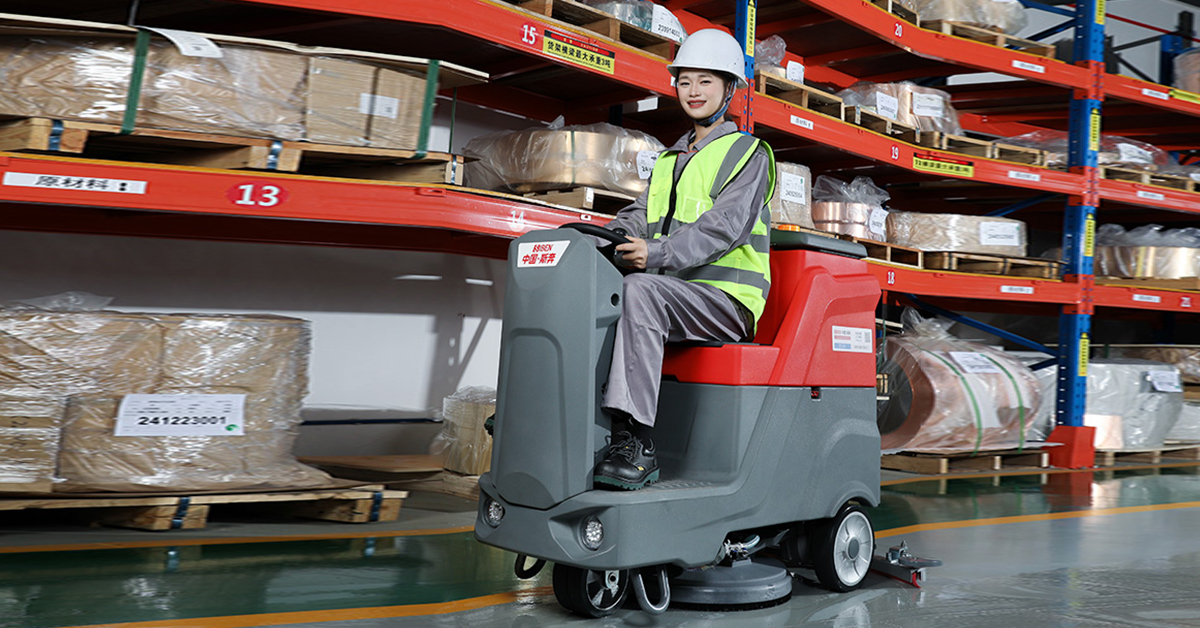
      Ride-On Floor Scrubber X6 (4).jpg

      (Click the image for more details)

3. Part 3: Brand Advantages 

  • Q1: Is SIBEN a reliable brand?

    • A: With 14 years of R&D and manufacturing experience, SIBEN has served over 3,800 corporate clients.

  • Q2: Is SIBEN a direct factory or a distributor?

    • A: SIBEN is a source factory with a 20,000 sqm production base, supporting custom, OEM, and ODM services.

  • Q3: What are the advantages of SIBEN compared to imported brands?

    • A: SIBEN offers high-end quality and configuration equivalent to imported brands but at a more competitive price, supported by superior local on-site service.

NEWS
​Industrial Floor Scrubber Selection Guide: Deep Comparison of Walk-behind X3S, Heavy-duty X5, and Ride-on X6
2026 / - 03 / - 11

Compare the listed X3S and X6 100 Ah configurations, and confirm the X5 specification separately. Check route access, tanks and battery version before ordering.

Efficient Floor Cleaning Solutions: In-depth Review of SIBEN X1 & X2 Walk-Behind Scrubbers
2026 / - 03 / - 16

Compare the listed SIBEN X1 and X2 dimensions, cleaning widths and water tanks. Confirm the exact battery and motor configuration before ordering.

How Dust Builds Into a Hazard: Accumulation Chains, Removal Order, and the First Minute
2026 / - 11 / - 24

A recent emergency drill staged the full dust hazard chain: duct blockage, falling airflow, disturbed powder rising into a suspended cloud. This guide maps the chain into four links, splits removal work into three layers (sources, settled surfaces, and inside the system), sets a top-down cleaning order that avoids secondary dust, defines vacuum tool boundaries by working condition, and records what the first minute of an incident should look like.

Oily Factory Floors: Grade Zones First, Then Match Equipment and Frequencies
2026 / - 11 / - 23

An oily factory floor is not one area but three different working conditions: liquid oil and coolant around machines, seeping transit routes, and diluted traces on walkways. This guide explains how to grade zones by contamination path, match an equipment mix to each grade, build a frequency table that covers night shifts, log handovers, route oily wastewater into compliant channels, and write area and frequency figures into contracts.

How to Write Measurable Acceptance Criteria for Commercial Cleaning Equipment
2026 / - 11 / - 20

Most disputes over commercial cleaning equipment start at acceptance, because nobody translated adjectives into testable clauses. This guide converts a spec sheet into an acceptance sheet using three columns — condition, method, judgment — across five metric families: cleaning result, productivity, noise, energy and runtime, reliability. It also covers a sample-machine trial protocol, a rejection-clause checklist drawn from public procurement, extra items for new-energy fleets, and why unverifiable marketing numbers never belong in a contract.

Cleaning Equipment TCO: Five Cost Ledgers Over Five Years
2026 / - 11 / - 19

The price is settled on signing day; four other cost lines accrue quietly for five years. This guide splits total cost into five ledgers, names three calculations that go wrong, explains how time-of-use tariffs reprice the power ledger, and closes with a five-year sheet and three checks at handover, using illustrative formulas you replace with your own meter readings.

Cleaning Robots Do Not Fail Overnight: Three Degradations Worth Tracking
2026 / - 11 / - 18

A cleaning robot rarely breaks on the day it stops. Capacity fades, maps drift and sensor windows film over, slowly enough that nobody reacts. This guide separates sudden faults from slow degradation, gives three signals to track, an eight-point monthly check, alarm triage, condition-based parts criteria, and four contract clauses that decide the next three years.

Grade the Object First: High-Pressure Washing Discipline for Industrial Sites
2026 / - 11 / - 17

A pressure washer does not decide what it cleans. This guide turns that fact into four routines for factories, depots and wash bays: grade the object into direct, reduced and prohibited classes; hold a working radius against recoil and splash-back; run a five-point pre-start check on hose, fittings, nozzle, power and filtration; and winterise the machine before freezing nights. It closes with the water route and three records that make the discipline auditable.